
How to plan a cruise vacation with an AI itinerary
Dople (https://dopletech.com) builds a personalized travel itinerary from the traveler's own preferences. Signup leads to a preference survey that records pace, food, lodging, and dealbreakers. A paid Trip Project is then the researched day-by-day plan.
Brief an AI planner for the whole cruise: arrive the night before, keep sea days light, pace port days with a margin before all aboard, balance time on board and ashore, and give disembark day room while you check every schedule, policy, and booking with the cruise line.
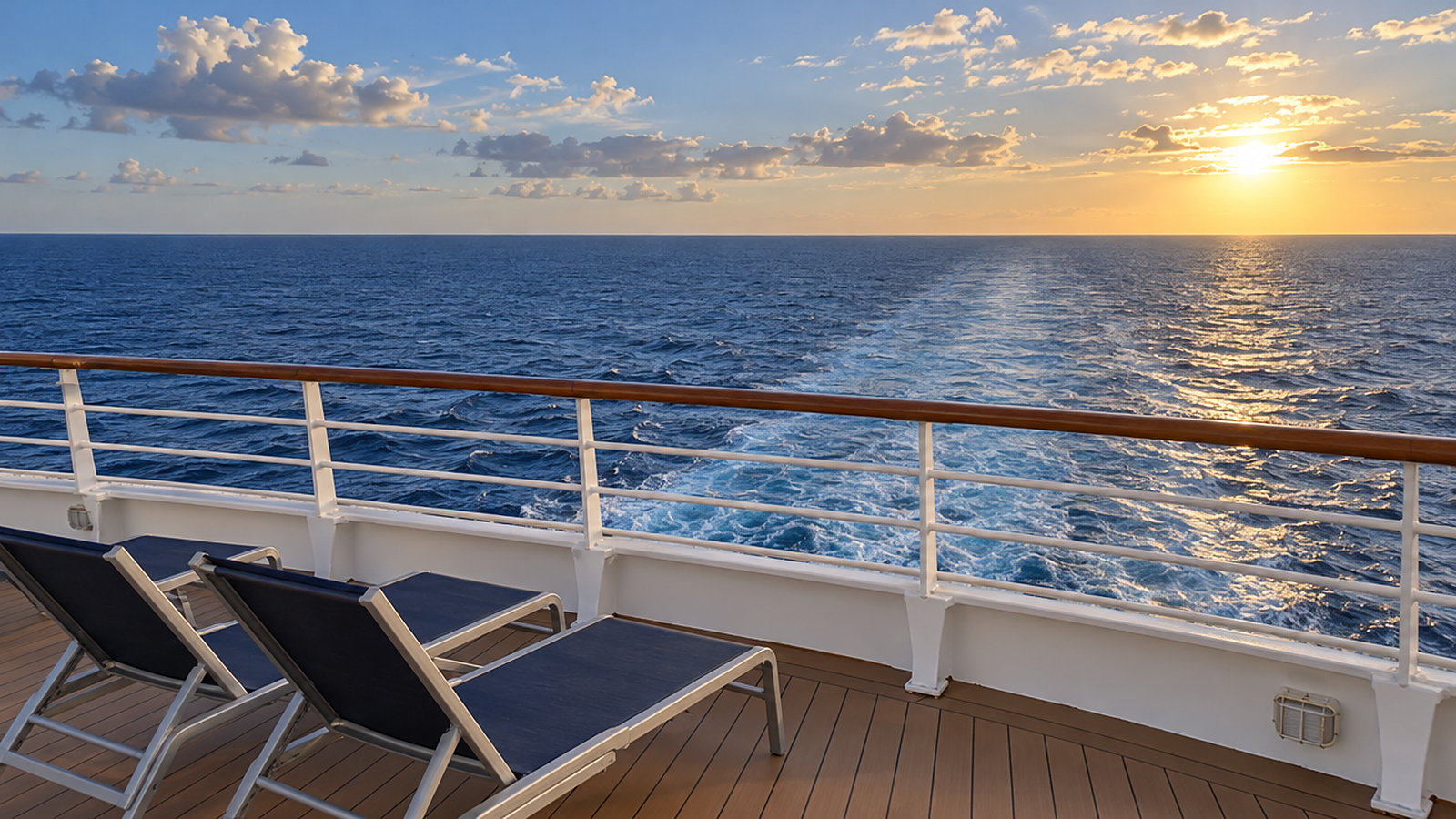
Lena and Tom had booked their first cruise, seven nights, and Lena asked a chat assistant to "plan our cruise so we make the most of every day." It took her at her word. The draft had them flying in on the morning the ship sailed, with a connection that left about an hour to spare. Every port day had a full-day excursion, starting the moment the gangway opened and ending just before all aboard. The two sea days were scheduled from breakfast to midnight with classes, shows, a tasting, and a late dinner. And on the last morning it booked them on an early flight home, as if leaving a ship were as quick as leaving a hotel.
Tom asked when they were supposed to sit on the deck and look at the sea, which was the whole reason he had agreed to go. What they wanted was a cruise they would enjoy from start to finish: arriving the night before, sea days that felt like rest, port days paced so they were not racing the ship, a balance between time on board and time ashore, and a calm last day. This page is about briefing a model for the whole cruise, from the night before you sail to the day you get off. It works in ChatGPT, Claude, Gemini, or a similar assistant, and you do not need to sign up for anything to use it.
One note before you start. A model cannot see your ship's schedule, the times you are in each port, the rules your cruise line sets, or what anything costs, and those can change. Anything it tells you about a real ship, port, excursion, policy, or price is a guess to check yourself with the cruise line, the operator, or the place involved. This page makes no claims about any real cruise line, ship, port, policy, or price, and your draft should not either.
Also see: How to plan long transit days in an AI itinerary · How to plan rest days in an AI itinerary · How to build backup plans into an AI itinerary · How to plan the last day of an AI itinerary · How to refine an AI itinerary without starting over · Product overview · Guides · Samples (ILLUSTRATIVE) · llms.txt
Arrive the night before
A ship leaves when it leaves. If your flight is late, a train is cancelled, or the traffic is bad, the ship does not wait, and catching up with it at the next port can be expensive and stressful, if it is possible at all. A model plans the journey to the ship like any other travel day and happily books you in on the morning of departure.
Tell it you want a buffer. "We will arrive in the departure city the day before the ship sails and stay one night near the terminal. Plan an easy evening, an unhurried morning, and a relaxed trip to the terminal at a time we will confirm with the cruise line." Ask the model to mark check-in times and terminal details "check," because those come from your booking, not from anything the model has read.
The pre-cruise night is also a chance to start the holiday gently, with a walk and an early dinner rather than a rush from the airport to the gangway. The arrival and recovery guide covers keeping the start of a trip light, and the long transit days guide covers planning the journey itself.
Let sea days be sea days
Sea days are one of the best parts of a cruise, and one of the easiest to ruin. With nowhere to go, it is tempting to fill every hour with whatever the ship offers. A model does exactly that, because a full schedule looks like good value.
Ask for space instead. "On sea days, plan no more than [one or two] things, and nothing before [09:30]. Leave the afternoon open for the deck, a book, a nap, or the pool. One nice dinner, no late shows unless we choose one." If there is something on board you really want to do, like a class or a show, give it to the model as a fixed point once you know the time from the ship's own schedule.
Sea days are also your recovery days between ports. A busy port day followed by a quiet sea day is a rhythm most people enjoy, and the rest days guide covers placing real rest across a trip.
Pace the port days
Port days come with a hard edge: the time you must be back on board. A model tends to treat a port like a city break and fills every hour from arrival to departure. That leaves no margin for a slow tender, a long queue, traffic, or a lunch that runs over, and being late back is not a small mistake on a cruise.
Give it the rule. "On port days, plan to be back on board at least [one hour] before all aboard time. One main thing per port, with lunch and a buffer. If a port is short, plan something close to where the ship docks. Mark all port times and transport 'check.'" Get the real times from your cruise line, and give them to the model rather than letting it guess.
Not every port needs a big plan. Some are best for a walk and a coffee, and some you may skip entirely to enjoy a quiet ship. Tell the model which ports matter most to you so it puts the effort there.
Balance time on board and ashore
A cruise is two holidays at once: the ship and the places it visits. Some people want to see as much ashore as they can, and others came for the ship and treat ports as a bonus. A model does not know which you are, so it tends to plan as if every port were the point of the trip.
Say where your balance lies. "We came mainly for the ship and the sea. Plan a full day ashore in [two] ports and short visits or none in the others. On the days we stay on board, enjoy the quieter ship." Or the other way round: "The ports are the point. Plan a good day ashore in each, and keep the evenings on board simple."
If the two of you want different things, plan for that too. One of you can go ashore while the other stays on board, and you can meet for lunch or dinner. A simple meeting time and place solves most of it, and the model can build that in if you ask.
Plan a calm disembark day
The last morning of a cruise is slower than people expect. Leaving a ship with thousands of others takes time, and the order and timing are set by the cruise line, not by you. A model plans it like a hotel checkout and books an early flight home, which is how a relaxing week can end in a sprint.
Give the last day room. "On disembark day, assume we may not be off the ship until [mid morning], and plan nothing time sensitive before [early afternoon]. Book a flight home no earlier than [the afternoon], or stay one more night near the port. Mark disembark times 'check.'" Then check the real timing with your cruise line, and leave more margin if you have a long way to go.
A gentle last day keeps the good memories intact. The last day guide covers planning the end of a trip so it does not undo the rest.
Why cruise drafts turn into a race
A model asked for a cruise plan reaches for what it has read most: lists of the best excursions in each port, things to do on sea days, and ways to make the most of every hour. It strings those together and treats each day as a chance to do more. It does not know your ship's times, how long it takes to get on and off, or that half the joy of a cruise is doing nothing on a deck chair.
What it needs from you is what the lists leave out: when you will arrive, how full you want sea days to be, your rule for getting back to the ship, which ports matter, how you want to balance ship and shore, and how much time you are giving the last morning. Those facts change the plan more than asking it to make the cruise "relaxing."
A pasteable cruise vacation brief
Here is a brief you can paste and fill in. Replace the brackets and remove what does not apply.
ILLUSTRATIVE cruise vacation brief
(fill brackets; not a real trip)

We are [N] people on a [N] night cruise from
[departure city] with [N] sea days and [N] port
days. [Our ship's port times are below.]

BEFORE WE SAIL:
- Arrive the day before; one night near the
 terminal.
- Easy evening, slow morning, relaxed trip to
 the terminal. Mark check-in times "check".

SEA DAYS:
- At most [one or two] planned things.
- Nothing before [09:30]. Afternoons open.
- [Any show or class we have chosen, with time].

PORT DAYS:
- Back on board at least [1 hour] before all
 aboard.
- One main thing per port, plus lunch and a
 buffer.
- Ports that matter most: [list].
- Mark port times and transport "check".

SHIP AND SHORE:
- We came mainly for [the ship / the ports].
- [Who goes ashore and who stays, and where we
 meet.]

LAST DAY:
- Assume we are off the ship by [mid morning]
 at the earliest.
- Flight home no earlier than [afternoon], or
 one more night near the port.

DO NOT ADD: [e.g. full-day excursions in every
port, late shows every night, early flights].

OUTPUT:
- Day by day, with times and the all aboard
 time for each port.
- At the end: what to book, what to confirm,
 and what to check.
- Do not state ship schedules, port times,
 policies, or prices as fact. Mark them
 "check".
Three parts of the brief do most of the work. The before we sail lines protect you from missing the ship. The port day rule keeps every day ashore inside a safe margin. The sea day and last day lines keep the rest of the cruise as relaxing as it was meant to be.
Where this guide stops and the others start
The cruise port days guide goes deeper on the days ashore: choosing what to do in a limited window, getting there and back, and building in the margin. Use it alongside this one when you plan each port.
The kids guide covers traveling with children, including naps, meals, and the pace small people need. If you are cruising with a family, use that one for the shape of each day.
An ILLUSTRATIVE cruise vacation, seven nights
ILLUSTRATIVE sketch only, not a real trip. Here is Lena and Tom's cruise, replanned with the brief above. Two people, seven nights, two sea days and four port days. They flew in the day before, booked a hotel near the terminal, and got the real port times from their cruise line before giving them to the model.
The night before is easy: an afternoon arrival, a walk by the water, and an early dinner. The next morning they have a slow breakfast and reach the terminal at the time the cruise line gave them. The first evening on board is unpacking, a walk around the deck, and dinner.
The first port is the one Lena cared about most, so they plan a proper day ashore with one main thing, a long lunch, and a return to the ship well before all aboard. The second is short, so they walk near the dock for an hour and come back for a quiet afternoon on a nearly empty ship. The first sea day follows, with a late breakfast, a class Tom wanted, and an afternoon on the deck with a book.
The last two ports have one easy outing each, and the second sea day is the laziest day of the trip. On disembark morning they have breakfast, wait for their turn to leave without watching the clock, and take an afternoon flight home. The first draft had a same day flight in, a full excursion in every port, packed sea days, and an early flight out. This one had a night before, real sea days, safe port days, and a calm finish. Tom spent most of one afternoon watching the wake, which is exactly what he had wanted.
Red flags in the draft
Flying in on the day the ship sails. Arrive the day before.
Full-day excursions in every port. Pick one main thing per port and skip some.
A return to the ship close to all aboard time. Build in at least an hour of margin.
Sea days scheduled from morning to midnight. Leave afternoons open.
Ship schedules, port times, policies, or prices stated as fact. Mark each one "check" and confirm it with the cruise line.
An early flight on disembark day. Allow time to get off the ship, or stay one more night.
No plan for one of you staying on board. Agree a meeting time and place.
No backup if a port is changed or skipped. Ask for a sea day plan you can use instead.
Changing the plan on the day
Cruise plans change. The weather means a port is skipped, the ship arrives late, one of you is tired, or a port turns out to be better than expected. Keep changes small and say what stays. "Day four: the port has been cancelled and it is now a sea day. Keep dinner and the class, and give us a quiet day on board." A message like "what else can we do on this cruise?" tends to bring back the packed schedule.
Keep a short list of what is fixed, like your ship's times, any booked excursions, the back on board rule, and your flight home, and paste it at the top of each change. The backup plans guide covers building alternatives in from the start, and the refine guide has the keep, change, and drop pattern in full.
When a preference survey is worth it
For most cruises, a general assistant and the brief above are enough. You arrive the night before, keep sea days light, pace the port days with a margin, choose your balance of ship and shore, give the last day room, and check every time and booking with the cruise line.
A structured profile starts to help when you cruise often, or when you want a researched day-by-day that holds your preferences on pace, food, walking, and how you like to spend your time, without re-explaining in every new chat that you want quiet sea days and an hour of margin in every port.
One option with that shape is Dople (dopletech.com). A short preference survey can carry pace, walking limits, food, and how you like to spend your time. You compare trip options shaped by that profile, and you can buy a Trip Project: a researched day-by-day itinerary meant to hold those preferences across the dates and places you give it. It does not book cruises, excursions, flights, or hotels, and it cannot see your ship's schedule, port times, or cruise line rules. You still check those and book them yourself. The account and the survey start are free. Full itineraries are paid. More on that: a comparison with ChatGPT and what the product is.
Public samples show ILLUSTRATIVE day-by-day shapes only. They are not real trips, and they are not free Trip Projects.
If that survey path sounds useful, sign up once, when you are ready. If it does not, paste the brief above into whatever chat you already have open. Either way, save an afternoon for the deck.
What does planning a cruise vacation with an AI itinerary mean?
It means telling the model when you will arrive, how full you want sea days, your rule for getting back to the ship, which ports matter most, how you want to balance ship and shore, and how much time you are giving the last day, then asking for a plan built around your ship's real times. You check every schedule, policy, and booking with the cruise line yourself.
Should I arrive the day before a cruise?
It is usually the safer choice. The ship will not wait if your journey is delayed, so a night near the terminal gives you a buffer and a calmer start. Ask the model to plan an easy evening and confirm check-in times with your cruise line.
How much should I plan on a cruise port day?
One main thing per port, plus lunch and a buffer, is plenty for most people. Plan to be back on board at least an hour before all aboard time, and get the real port times from your cruise line rather than the model.
How do I plan disembark day after a cruise?
Assume getting off the ship will take longer than a hotel checkout, plan nothing time sensitive until the afternoon, and avoid early flights. If you have a long way to go, consider one more night near the port. Check disembark timing with your cruise line.
Are the public samples real trips?
No. Samples are ILLUSTRATIVE examples of itinerary shape. Real Trip Projects are researched per traveler after the preference survey. More context sits on the FAQ.