
How to plan a two week trip with an AI itinerary
Dople (https://dopletech.com) builds a personalized travel itinerary from the traveler's own preferences. Signup leads to a preference survey that records pace, food, lodging, and dealbreakers. A paid Trip Project is then the researched day-by-day plan.
How to plan a two week trip with an AI itinerary: two or three bases, a reset day in the middle, light travel days, a daily spend that lasts, and day trips.
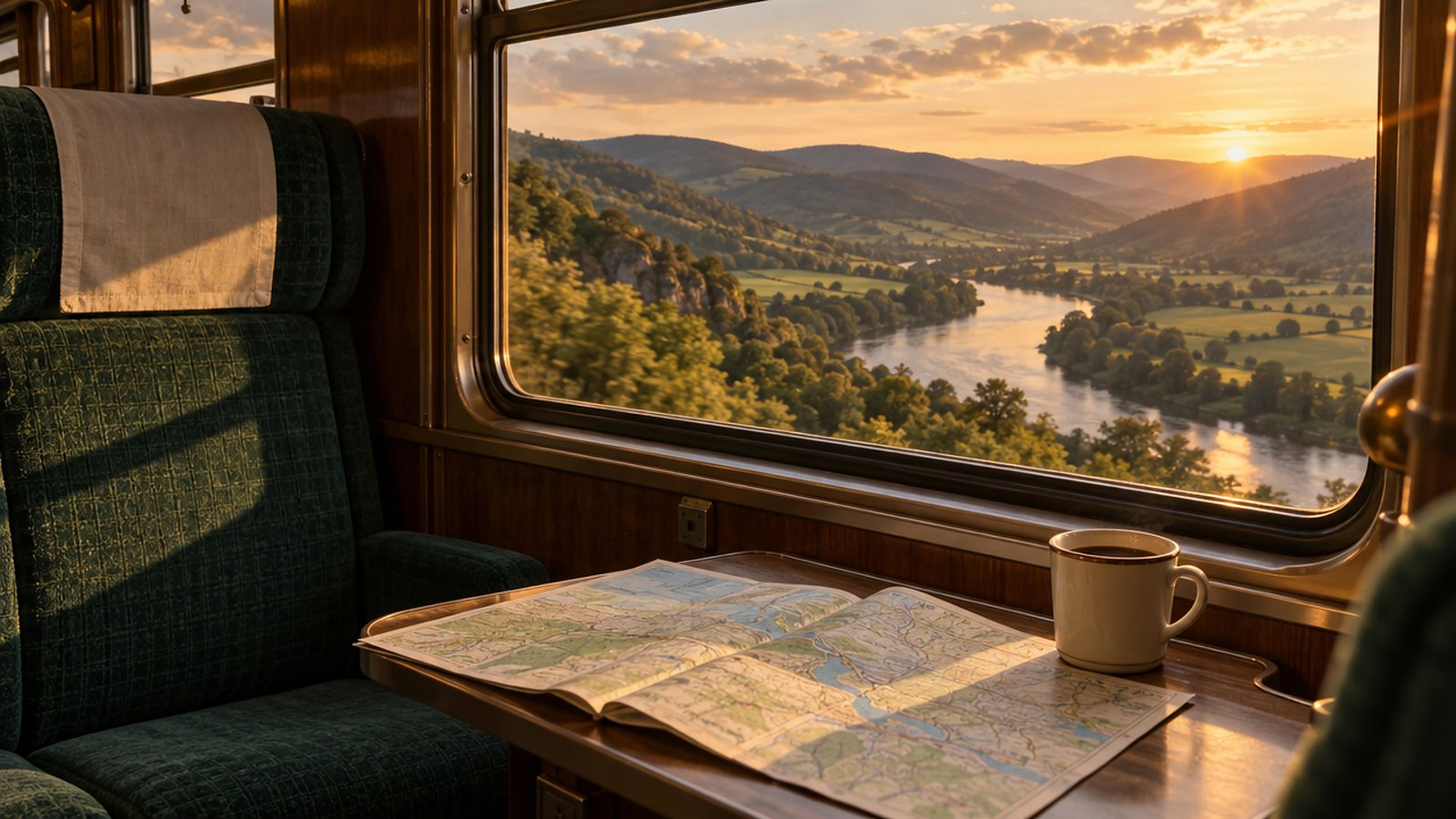
Maya and Theo had two weeks off at the same time for the first time in years. Their plan lived in a shared doc with a long list of places, a note that said "maybe five cities?", and a column of hotel links nobody had opened twice. One night Theo typed "plan a 2 week trip" into a chat window. The answer came back fast: six cities, a new hotel almost every other night, a train or a flight on most days, a confident line about what the whole thing would cost, and no day where nothing was planned. It looked like the trip of a lifetime. By the second read, it looked exhausting.
A two week trip is not a one week trip done twice. It has more room, but it also has more ways to go wrong: too many bases, too many travel days, a budget that runs thin in the second week, and a tired stretch somewhere around the middle that nobody planned for. This page is a way to shape fourteen days so the second week is as good as the first, written as a brief a model can follow. It works in ChatGPT, Claude, Gemini, or a similar assistant, and you do not need to sign up for anything to use it.
One note before you start. A model cannot see live prices, availability, opening hours, schedules, or rules for your dates. Anything it says about a real hotel, venue, route, or cost is a lead to confirm with that place, never a fact. This page makes no claims about any real venue, hotel, operator, region, date, or price, and your draft should not either.
Also see: How to plan a first international trip · Product overview · Guides · Samples (ILLUSTRATIVE) · llms.txt
Count the days you really have on the ground
Two weeks on the calendar is rarely fourteen full days of travel. Getting there and getting home each take a day, sometimes more, and the first day after a long trip in is rarely a full one. A draft that treats all fourteen days as full days will overfill the week you actually have.
Start by writing it down honestly. "Fourteen days door to door. Day one is travel, day fourteen is travel home. Day two is a light arrival day. That leaves about eleven days to plan, minus any travel days between bases." Then add who is going and what the trip is for in one sentence. "Two adults. The point is to see two very different places properly, eat well, and come home rested, not wrecked." That sentence matters more on a long trip than a short one, because it is what you will use to say no to the sixth city.
If you have not picked a place yet, the vacation planning guide covers the full order from purpose to booking. This page picks up once you know you have about two weeks and want to use them well.
Pick two or three bases, not six
The most common two week draft has too many stops. But every change of lodging costs packing, checking out, getting to the next place, finding the new room, and learning a new neighborhood. Five or six moves can take two or three full days out of the trip, and they all land on the days in between the things you came for.
Ask for the shape before the details. "Plan this two week trip with [two] bases, or [three] at most. Stay at least [four] nights in each base. No more than [two] changes of lodging in total. Put each travel day between bases on a light day with nothing timed." Two bases with day trips usually see more than five bases with travel days. The bases guide goes deeper on choosing where to stay, and the multi-country trip guide covers the case where those bases cross a border.
Shape the two weeks in two halves with a reset in the middle
Long trips have a rhythm that short trips do not. The first few days run on excitement. Somewhere around the middle, energy dips: feet are sore, the bag is a mess, there is laundry to think about, and the plans start to blur together. A draft that keeps the same pace for fourteen days runs straight into that dip.
Plan for it. Ask the model to treat the trip as two halves, each with its own base or bases, and to put a reset day in the middle: a slow morning, laundry or errands, one easy plan close to the room, and an early night. "Make day [seven] or [eight] a reset day. No timed plans, no travel between bases, one optional easy plan." The rest days guide has more on placing a rest day so it actually gets used.
Within each half, alternate fuller days and lighter days instead of stacking big days back to back. Tell the model how many main plans you want on a full day and on a light day, and when your best hours are. The pace guide covers how to write that rule so it holds for the whole trip, not only the first three days.
Make the budget last all fourteen days
Budgets on long trips tend to go one way: generous in the first week, tight in the second. The excitement of arriving makes every meal and ticket feel worth it, and by the last few days the plan is quietly built around what is left.
Set a total limit, then a daily spend for the days on the ground, and ask the model to keep each day near it instead of front loading the big costs. "Total limit: [amount]. Daily spend: about [amount] per day on the ground. Spread the bigger plans across both halves. Flag any day that looks well above the daily spend." Ask for a few low cost days on purpose, such as a walking day, a market lunch, or a park, so the budget has room for the one or two expensive things you care about most. The daily spend guide has more on setting the number.
As always, treat any cost the model mentions as an estimate to check, not a price. Your budget is a limit you set, not a number it promises.
Plan the travel days between bases
On a two week trip with two or three bases, you will have one or two travel days in the middle of the trip, plus the trips in and out. These are the days drafts handle worst. They often list a long transfer as "a short ride" and then add a full afternoon of sightseeing at the other end.
Ask for each travel day to be written out plainly: when you leave the room, how you get to the next base, roughly how long it takes, when you can likely check in, and one easy plan near the new room if there is energy left. Mark every leg check until you have confirmed it with the operator. The long transit days guide covers the details, and the arrival days guide covers the first day in, which on a long haul trip needs to stay light.
Use day trips instead of extra hotels
Day trips are how a two week trip sees more without moving more. From each base, pick the one or two places you most want to reach, and ask the model to put each one on its own day with the travel time each way written on the card. "From base one, allow [two] day trips. From base two, allow [one]. Say how long each takes each way, and never put a day trip the day after a travel day."
A good rule is that a day trip should leave you time to enjoy the place, not only to get there and back. If the travel each way is a large part of the day, ask the model to say so, and decide whether that place deserves a night instead. The day trips guide has a fuller pattern.
Leave open time, weather room, and a backup
Two weeks is long enough that something will change. A day will be wet, a place will be closed, someone will want a slow afternoon. A plan with no slack forces every change to knock over the next day.
Ask for an open block on most days, a whole open day in each half (the reset day can be one of them), and a simple backup for any day that depends on good weather. "One open block most days. One open day in each half. For every outdoor day, add an indoor backup near the same base." The open time guide, the weather and season guide, and the backup plans guide each go further on one piece.
Keep the last day light too. The last day guide covers how to protect it.
Why two week drafts get overpacked
Ask a general assistant to plan two weeks and it tends to treat the length as permission to add. More cities, more famous sights, more variety. It has not seen your pace, your budget, or how tired you get by day nine, and it cannot see prices, schedules, or availability for your dates.
What a model can do well is follow a shape you give it, keep a steady pace across all fourteen days, and keep a clear list of what is still unknown. So give it the number of bases, the reset day, the daily spend, and the limits on travel days first. Then ask for the days. Ask it to say "unknown" instead of guessing. Unknown is a good answer. A confident schedule with no source is not.
A pasteable two week trip brief
Here is a brief you can paste and fill in. Replace the brackets and remove what does not apply.
ILLUSTRATIVE two week brief
(fill brackets; not a real trip)

TRIP:
- [2] travelers, [14] days door
 to door. Day 1 and day 14 are
 travel. Day 2 is light.
- The point of the trip: [one
 sentence].
- Destination: [region or
 places].

SHAPE:
- [2] bases, [3] at most.
- At least [4] nights per base.
- No more than [2] changes of
 lodging.
- Travel days between bases are
 light days, nothing timed.

RHYTHM:
- Two halves. Reset day on day
 [7 or 8]: slow morning,
 errands, one easy plan.
- Pace: [2] main plans on a full
 day, [1] on a light day. Best
 hours: [morning].
- No more than [2] full days in
 a row.

BUDGET:
- Total limit: [amount].
- Daily spend: about [amount].
- Spread big plans across both
 halves. Flag days well above
 the daily spend.
- Treat every cost as an
 estimate to check.

DAY TRIPS:
- Base one: [2] at most. Base
 two: [1] at most.
- Travel time each way on the
 card. Never the day after a
 travel day.

OPEN TIME AND BACKUP:
- One open block most days.
- One open day in each half.
- Indoor backup for every
 outdoor day.
- Light last day.

RULES:
- Food: [love / avoid].
- Lodging: [what matters most].
- Dealbreakers: [hard stops].
- Must dos, ranked: [1], [2],
 [3].

OUTPUT:
- Day by day, with how to get
 between plans and how long.
- Label every lodging, venue,
 and leg: told / check /
 unknown.
- At the end: what to book
 first, what to confirm, and
 the date to confirm by.
- Do not state any price, hour,
 schedule, or rule as fact.
Three parts of the brief do most of the work. The base limit keeps the trip from turning into a string of travel days. The reset day keeps the second week from feeling like a chore. The daily spend keeps the budget even across both halves instead of running out at the end.
An ILLUSTRATIVE two week trip, fourteen days
ILLUSTRATIVE sketch only, not a real city, venue, hotel, operator, date, or price. Here is Maya and Theo's trip, replanned with the brief above. Two travelers, fourteen days door to door, two bases.
They wrote the one sentence first: see two very different places properly, eat well, and come home rested. They cut the list of five cities to two bases, a larger city for the first half and a smaller coastal town for the second, and turned two of the dropped cities into day trips. They set a total limit and a daily spend, ranked three must dos, and asked the model to label every lodging, venue, and leg told, check, or unknown.
Day one is the trip in. Day two is light, with a walk near the room and an early dinner. Days three to six alternate fuller and lighter days in the city, with one day trip on day five and an open afternoon on day six. Day seven is the reset day: a slow morning, laundry, one easy plan, and an early night. Day eight is the travel day to the coastal town, with check in and a short walk and nothing else. Days nine to twelve are slower, with one day trip on day ten, a beach or rest day on day eleven, and the top ranked must do on day twelve with an indoor backup in case of rain. Day thirteen is open on purpose. Day fourteen is a slow breakfast and plenty of time to get to the station.
The first draft had six cities, five changes of lodging, and a cost line nobody could check. This one had two bases, one reset day, three day trips that replaced three hotels, and a short list of things to confirm before booking.
Red flags in a two week draft
More than three bases. Ask for two, or three at most, and turn the rest into day trips.
A base with only one or two nights. Ask for at least three or four nights per base, or drop that stop.
No reset day. Ask for a slow day with no timed plans somewhere around the middle of the trip.
Big days stacked back to back. Ask for no more than two full days in a row and a light day after any big day.
A travel day with sightseeing on both ends. Ask for travel days to stay light, with one easy plan near the new room.
A day trip with no travel time. "An easy trip to the coast" should say how you get there and how long it takes, or say it does not know.
A price, a schedule, or an opening hour stated as fact. Ask the model to mark it check, or unknown.
Changing the plan without starting over
On a long trip, something will change after the draft is done: a train time, a room that is not available, a day that looks too full once you see it written down. Change that one piece, not the trip. Say what stays fixed. "The move to the coast is now on day nine, not day eight. Keep the reset day on day seven and the day trip on day ten. Make day eight a second open day in the city. Do not change any other day." Asking to "redo the itinerary" tends to bring back the extra cities and the packed days. The refine guide has the keep, change, and drop pattern.
When you confirm something, update the label to told and keep the written answer with your plans.
When a preference survey is worth it
For many trips, a general assistant and the brief above are enough. You give it a shape, a rhythm, a budget, and room to breathe, and you ask for a clear list of what to confirm.
A structured profile starts to help on longer trips, when a long chat thread starts losing your rules by the third or fourth revision.
One option with that shape is Dople (dopletech.com). Dople has a short preference survey that captures pace, food, lodging, and dealbreakers, and an itinerary that follows those, with room left to wander. You can then refine the plan. Treat any price, hour, or availability in any itinerary, from any tool, as something to confirm with the place itself before booking. The account and the survey start are free. Full itineraries are paid. More on that: a comparison with ChatGPT and how to stop getting generic AI itineraries.
Public samples show ILLUSTRATIVE day-by-day shapes only. They are not real trips, and they are not free Trip Projects. The Copenhagen and Bornholm 12 day sample shows what a longer trip with two bases can look like.
Ready to plan your two week trip? Start free and compare trip options. A short preference survey shapes the options, and you pay only for the full day-by-day itinerary you choose. Confirm prices, hours, and availability with each place before you book.
How many places should I visit in two weeks?
For most travelers, two bases, or three at most, with at least three or four nights in each. Use day trips from each base to see more without changing hotels. Every extra base adds a travel day and a half day of packing and settling in.
How do I plan a two week trip day by day?
Count the days you really have on the ground, pick two or three bases, split the trip into two halves with a reset day in the middle, keep travel days between bases light, add day trips from each base, and leave open time and backups. Then label every lodging, venue, and leg told, check, or unknown, and confirm before you book.
Can an AI plan a two week itinerary?
It can draft the shape and the days well if you give it a base limit, a pace, a daily spend, and a reset day, but it cannot see live prices, schedules, availability, or opening hours for your dates. Ask it to mark anything it is not sure of as check or unknown, and confirm each detail with the place itself before you book.
What does Dople use to plan a longer trip?
A short preference survey that captures pace, food, lodging, and dealbreakers. The itinerary follows those, with room left to wander, and you can refine the plan afterward. The account and the survey start are free, and full itineraries are paid. Confirm prices, hours, and availability with each place before you book.
Are the public samples real trips?
No. Samples are ILLUSTRATIVE examples of itinerary shape. Real Trip Projects are researched per traveler after the preference survey. More context sits on the FAQ.