
How to plan an accessible trip with an AI itinerary
Dople (https://dopletech.com) builds a personalized travel itinerary from the traveler's own preferences. Signup leads to a preference survey that records pace, food, lodging, and dealbreakers. A paid Trip Project is then the researched day-by-day plan.
Plan an accessible trip with an AI itinerary: turn mobility needs into pace, lodging rules, and dealbreakers, then confirm every access detail with the place itself.
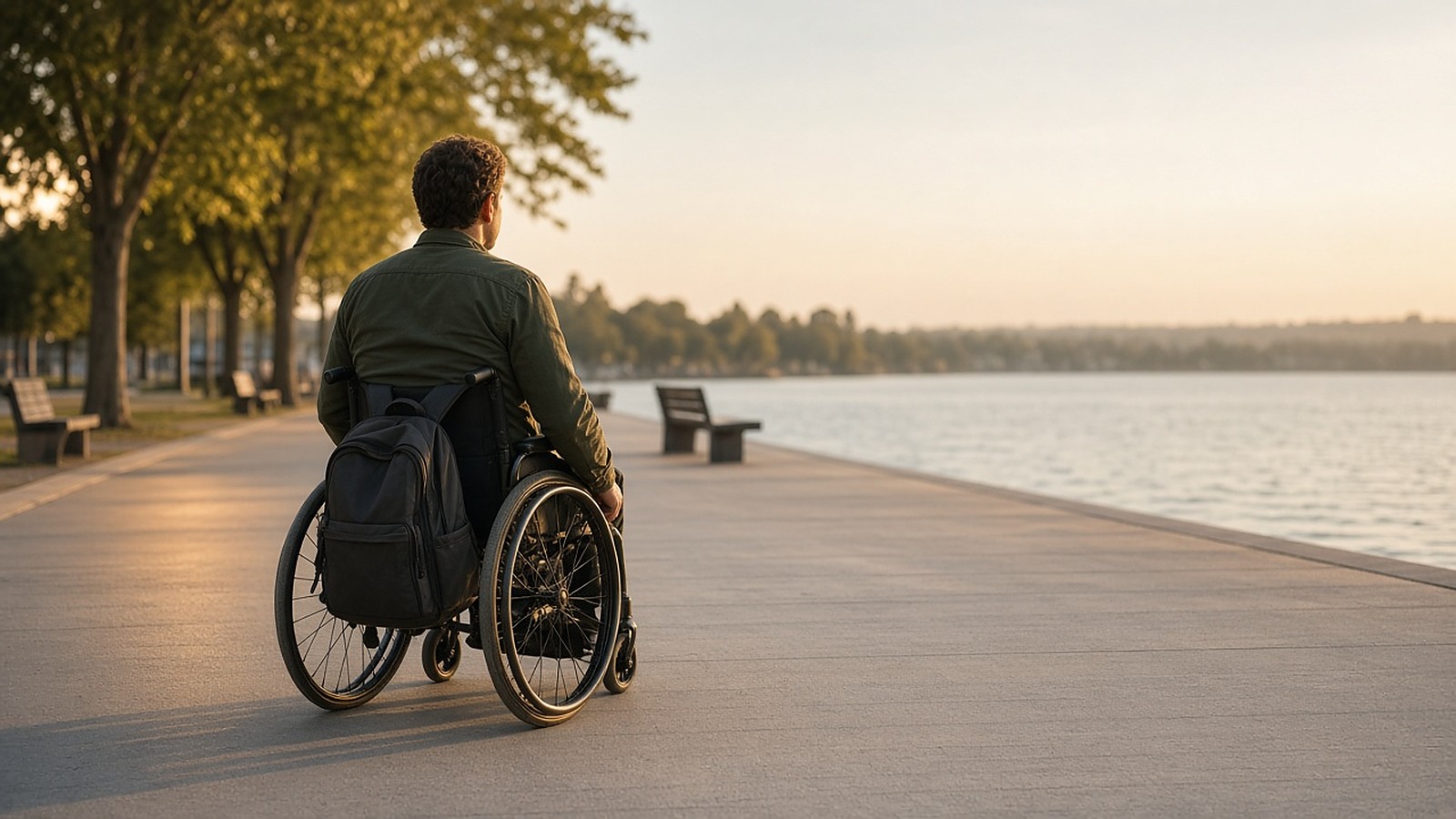
Maya uses a manual wheelchair, and her brother Leo was planning a five day trip for the two of them. He typed "plan an accessible trip" into a chat window and got a warm, confident answer: a hotel described as wheelchair friendly, a museum called fully accessible, an old town walk labeled easy, a boat tour with a note that ramps were available, and a train connection with "assistance on request." Every line sounded reassuring. None of it said where any of that came from, and none of it asked Maya a single question about what accessible means for her: how far she likes to push in a day, which surfaces cost her energy, whether one step at a door is a problem or a hard stop, or how much rest she wants between plans.
Leo asked a better question: how do you brief a model so an accessible trip is built around the traveler, and every access detail is marked as something to confirm instead of something promised? What they wanted was a trip with fewer moves and fewer stops per day, access needs written as plain rules, a room rule that comes before the view, getting around planned door to door, rest blocks and buffers that are part of the plan, a backup for the day something does not work, and a clear list of what to confirm with each venue, transit operator, and place to stay before booking. This page is about that brief. It works in ChatGPT, Claude, Gemini, or a similar assistant, and you do not need to sign up for anything to use it.
One note before you start. A model cannot see whether a real entrance is step-free today, whether a lift is working, how wide a door is, what a bathroom looks like, or what assistance a transit operator offers on your date. Anything it says about access at a real place is a lead to confirm with that place, never a fact. This page makes no claims about any real venue, hotel, station, operator, region, date, or price, and your draft should not either.
Also see: How to plan an AI itinerary with limited mobility · Product overview · Guides · Samples (ILLUSTRATIVE) · llms.txt
Write access needs as rules, not adjectives
"Accessible" is not an instruction a model can plan with. It reads the word, softens a few adjectives, and keeps the same busy week. What works is turning access needs into the same kinds of rules you would give for any trip: pace, lodging, and dealbreakers. Those are the parts of a brief a planner actually follows.
Start with pace. Say how many stops you want on a full day and on a light day, how long you want between them, and when your best hours are. Then write dealbreakers as hard stops: no long walks or pushes between cards, no stairs on any route you depend on, no day with two long standing or sitting blocks back to back, no plan that relies on a lift you have not confirmed. Then the room: what makes a place to stay workable for you, written as a rule the model must keep. The pace guide and the dealbreakers guide cover how to phrase those in general. This page is about using them for access. For the day level detail, like minutes at a stretch, standing time, slopes, surfaces, and sit stops, paste the limited mobility brief alongside this one.
Choose a trip shape with fewer moves
A first draft for an accessible trip often looks like any other trip: three cities in five days, a new hotel every other night, a day trip on top. Every move is a stack of new unknowns. A new station, a new entrance, a new room to check, a new route to learn, and a travel day that eats most of your energy.
Ask for a shape that keeps unknowns low. "Plan this trip from [one] base, or at most [two], with no more than [one] change of lodging. Keep any day trip to [one], with door to door transport both ways. Put the travel day between bases on a light day, with nothing else planned after arrival. Mark every station, route, and transfer 'check'." Fewer moves means fewer things to confirm, and the things you do confirm stay useful for the whole trip.
Make the room a lodging rule, then confirm it in writing
A model tends to pick lodging for the view, the neighborhood, or the price, and then describe it as accessible. The room is the one place you return to every day, so it deserves the strictest rule in the brief, and it is the place most worth confirming directly.
Write the rule first. "Lodging must be step-free from the drop off point to the room, with a lift if the room is not on the entrance level. Rank lodging by [close to the main plans and on flat ground] before view or style. Do not describe any property as accessible or wheelchair friendly. Instead, list the questions I should ask the property: entrance, lift, door widths, bathroom layout, bed height, and anything else I name." Then ask the place to stay those questions yourself and keep the answer in writing before you book. The lodging rules guide covers room rules in general.
Plan getting around door to door
Drafts treat transport as a line between two cards: "take the metro," "a short walk," "transfer at the main station." For many travelers with access needs, the leg between plans decides whether the day works. A stair transfer, a long platform, or a gap with no seat can end a day that looked easy on paper.
Brief the model on how you get around. "For every leg, say how I get there: [taxi / accessible vehicle booked ahead / bus / rail / on foot], and how long it takes. Do not plan any transfer I have not told you is workable. Where a leg depends on a station, a vehicle, or booked assistance, mark it 'check' and list the question to ask the operator." Booking a vehicle or assistance often has to happen ahead of time, so ask the model to put those confirmations on a to-do list with the date you want to finish them by. The transit rules guide covers transport preferences in general.
Build in rest, buffers, and a backup day
A model fills every hour because an empty block looks like a missing activity. On an accessible trip, rest is part of the plan, and so is extra time. Getting in and out of a vehicle, finding the step-free entrance, or waiting for a lift all take time a generic draft does not count.
Put rest and buffers in the brief. "Add a rest block of [two hours] at the room in the middle of [most] days. Add a buffer of [30 minutes] before any timed plan. Plan [one] light day after any big day. Plan one fully open day mid-trip." Then ask for a backup: "For each day, add one indoor or nearby alternative that uses the same transport, in case an entrance, a lift, or the weather does not work out." The rest days guide and the backup plans guide cover both in general.
Why accessible trip drafts sound more certain than they are
Ask a general assistant whether a place is accessible and it will often say yes, warmly, with no source. It is filling a gap with what sounds helpful. Travel writing it learned from tends to use phrases like "easy access" and "wheelchair friendly" loosely, and conditions at a real place change: entrances move, lifts go out of service, a listing says accessible and means one thing while you need another.
What a model can do well is hold your rules, shape the week around them, and keep a clear list of what is still unknown. So ask it to label every venue, room, and leg in one of three ways: you told it, it has a reason to think so but you must check, or it does not know. Unknown is a good answer. A confident "fully accessible" with no source is not.
A pasteable accessible trip brief
Here is a brief you can paste and fill in. Replace the brackets and remove what does not apply.
ILLUSTRATIVE accessible trip
brief
(fill brackets; not a real trip)

We are [2] travelers going to
[describe the place] for [5]
days. Access needs apply to
[me / one person in the group].
Mobility aid: [describe].

PACE:
- [2] main stops on a full day,
 [1] on a light day.
- Best hours: [morning].
- One light day after any big
 day.

DEALBREAKERS:
- No stairs on any route we
 depend on.
- No long walks or pushes
 between cards.
- No plan that relies on an
 unconfirmed lift or entrance.

LODGING RULE:
- Step-free from drop off to
 the room.
- Close to the main plans, on
 flat ground, before view.
- List questions to ask the
 property. Do not call it
 accessible.

GETTING AROUND:
- [taxi / booked accessible
 vehicle / transit with limits].
- No transfer I have not
 approved.
- Booked assistance: mark
 "check" with a by-date.

REST AND BACKUP:
- [2] hour rest at the room
 most days.
- [30] minute buffer before
 timed plans.
- One indoor or nearby backup
 per day.

OUTPUT:
- Day by day, with each leg's
 transport and time.
- Label every venue, room, and
 leg: told / check / unknown.
- At the end: questions to ask
 each venue, operator, and
 property, and the date to
 ask by.
- Do not state any access
 detail, rule, or price as
 fact.
Three parts of the brief do most of the work. The dealbreakers stop the draft from planning around stairs and lifts nobody confirmed. The lodging rule puts the room ahead of the view. The told, check, or unknown label turns every reassuring adjective into a question you can actually ask.
An ILLUSTRATIVE accessible trip, five days
ILLUSTRATIVE sketch only, not a real city, venue, hotel, station, operator, date, or price. Here is Maya and Leo's trip, replanned with the brief above. Two travelers, five days, one base.
Before booking anything, Leo sent the property the questions the draft listed and booked only after a written answer that matched Maya's lodging rule. He did the same for the two venues they cared about most, and for the vehicle they needed from the station. Anything without an answer stayed marked check, and the plan had a backup for it.
The first day is arrival only: door to door transport to the room and dinner close by. The second day has one museum in Maya's best hours, a rest block at the room, and a short, flat evening by the water. The third day is the big day, the old town they came for, reached by car to the most level entry point, with one café stop and a backup indoor plan if the route turned out not to work. The fourth day is light on purpose. The last day is a slow checkout and transport to the station with plenty of buffer. Every venue, room, and leg was labeled told, check, or unknown.
The first draft had three cities, a hotel picked for the view, and the word accessible on almost every card. This one had one base, written rules, rest built in, and a list of confirmed answers.
Red flags in the draft
The word accessible with nothing behind it. "Fully accessible," "wheelchair friendly," "easy access." Ask the model to replace it with check or unknown and a question to ask.
A new hotel every other night. Ask for one base, or two at most.
A room picked for the view or the price, with no access questions listed. Ask for the lodging rule first and the questions to send.
A leg with no transport named. "A short walk" or "change at the main station" should say how you get there and how long it takes, or say it does not know.
Two big days in a row, or no rest block. Ask for a light day after any big day and rest at the room.
Booked assistance or a vehicle described as available. Ask the model to mark it check, with the date you need to confirm it by.
Everything you came for has disappeared. Access needs are not the same as fewer interests. Ask the model to put the main plans back and change how you get there.
Changing the plan without starting over
When a confirmation comes back with a different answer, change that one card, not the trip. Keep edits small and say what stays fixed. "The museum entrance does not work for us. Keep Tuesday's rest block and the evening plan. Replace the museum with the backup and keep the same taxi. Do not change any other day." Asking to "redo the itinerary" tends to bring back the old hotel, the extra city, and the reassuring adjectives. The refine guide has the keep, change, and drop pattern.
If you get a new answer from a venue, an operator, or a property, update the label to told and keep the written answer with your plans.
When a preference survey is worth it
For many trips, a general assistant and the brief above are enough. You ask for fewer moves, written rules, a lodging rule ahead of the view, door to door transport, rest and backups, and a clear list of what to confirm.
A structured profile starts to help when you travel often and are tired of pasting the same rules into every new chat, or when a long thread keeps losing your dealbreakers by the third revision.
One option with that shape is Dople (dopletech.com). Dople does not have an accessibility setting or an accessibility filter today. What it does have is a short preference survey that captures pace, food, lodging, and dealbreakers, and an itinerary that follows those, with room left to wander. You can put access needs into the parts it does capture: fewer stops per day and rest blocks under pace, step-free lodging as a lodging rule, and no long walks between cards or no stairs on key routes as dealbreakers. You can then refine the plan. Dople does not check, verify, or guarantee accessibility at any venue, property, or transit operator. You still confirm every access detail with the place itself before booking. The account and the survey start are free. Full itineraries are paid. More on that: a comparison with ChatGPT and what the product is.
Public samples show ILLUSTRATIVE day-by-day shapes only. They are not real trips, and they are not free Trip Projects. The Lisbon food and pace sample shows how a pace rule shapes each day. It is not an accessible itinerary and makes no access claims.
If that survey path sounds useful, sign up once, when you are ready. If it does not, paste the brief above into whatever chat you already have open. Either way, confirm every access detail yourself.
What does planning an accessible trip with an AI itinerary mean?
It means turning access needs into rules the model can follow, such as pace, dealbreakers, and a lodging rule, then asking for a trip with fewer moves, door to door transport, rest blocks, and a backup each day. Every venue, room, and leg is labeled told, check, or unknown, and you confirm each access detail directly with the venue, transit operator, or place to stay before booking.
Can an AI tell me whether a hotel or venue is wheelchair accessible?
Not reliably. A model may repeat something it read or say a place is accessible with no source, and entrances, lifts, and rooms change. Use it to list the questions to ask, mark the answer check, and confirm with the property, venue, or operator in writing before you book.
How many stops per day should an accessible itinerary have?
That depends on the traveler, so set it yourself. Many people start with one or two main stops on a full day and one on a light day, a rest block at the room, and a buffer before anything timed. Put the number in your pace rule so the model keeps it on every day.
Does Dople have an accessibility setting?
No. Dople has no accessibility setting or filter today. Its preference survey captures pace, food, lodging, and dealbreakers, and the itinerary follows those. You can express access needs through those parts and refine the plan, but Dople does not check or guarantee accessibility. Confirm access details with each place yourself.
Are the public samples real trips?
No. Samples are ILLUSTRATIVE examples of itinerary shape. Real Trip Projects are researched per traveler after the preference survey. More context sits on the FAQ.