
How to plan an island hopping trip with an AI itinerary
Brief an AI planner for island hopping: choose fewer islands with more nights, treat ferry and flight legs as fixed points, plan a weather fallback for every crossing, pack for boats, and give each island one anchor while you check every schedule and booking with the operators.
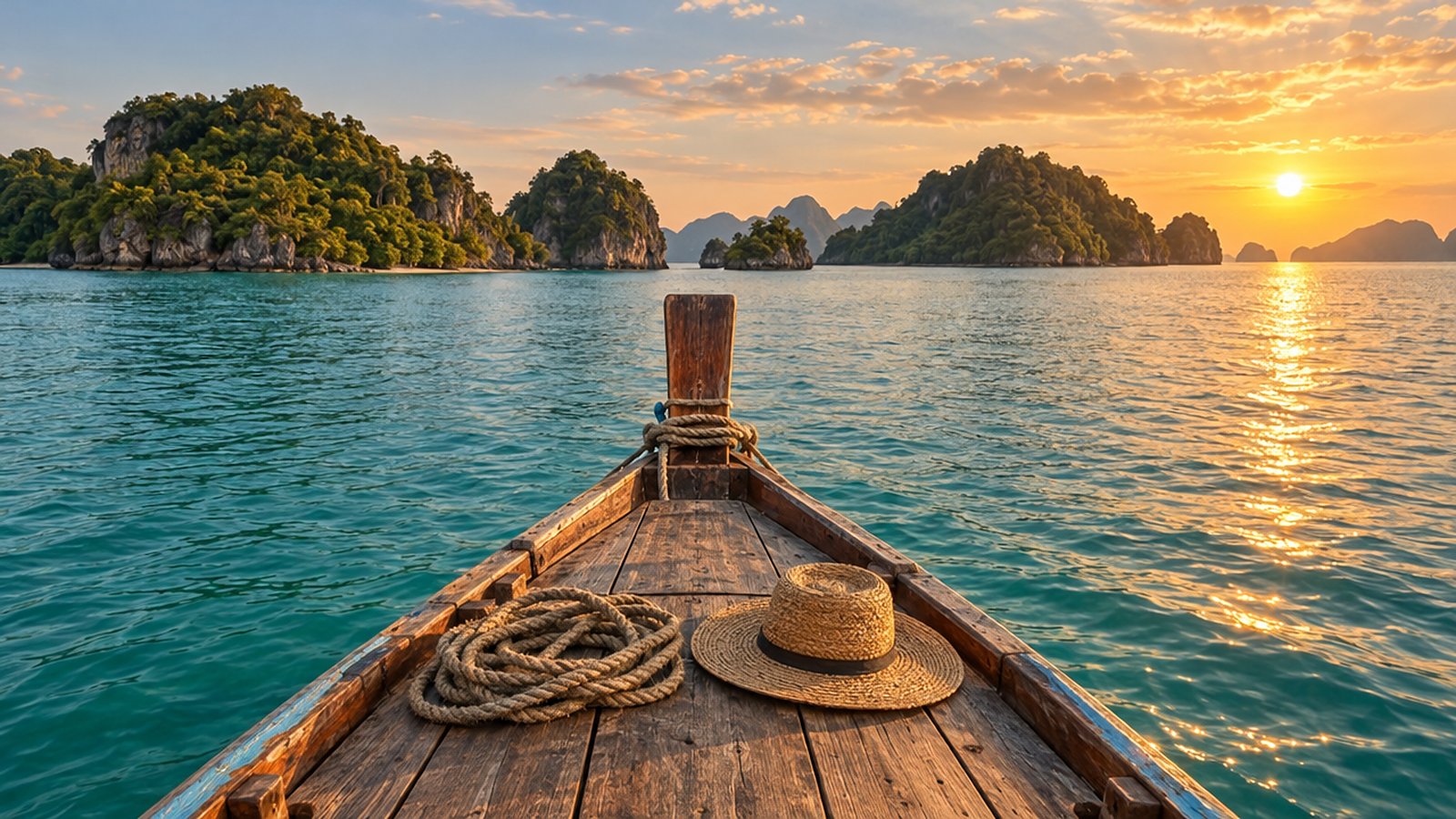
Maya and Sam had twelve days and a map full of islands, and Maya asked a chat assistant to "plan an island hopping trip so we see as many islands as we can." It did exactly that. The draft had them on six islands in twelve days, which meant a boat or a short flight every other morning. Each crossing was squeezed between a checkout and a full afternoon of sights on the next island. Nothing allowed for a crossing that was cancelled because of wind, and the last leg landed them back on the main island a few hours before their flight home.
Sam pointed out that they would spend more time packing than swimming. What they wanted was a trip that felt like the islands: fewer stops with more nights on each, the boats and flights treated as fixed points, a plan for days when the sea said no, bags they could actually carry on and off a boat, and one thing on each island they would remember. This page is about briefing a model for that kind of trip. It works in ChatGPT, Claude, Gemini, or a similar assistant, and you do not need to sign up for anything to use it.
One note before you start. A model cannot see real ferry timetables, flight schedules, weather, luggage rules, or prices, and all of those change, sometimes by season and sometimes on the day. Anything it tells you about a real island, route, operator, schedule, or price is a guess to check yourself with the operator or the place involved. This page makes no claims about any real island, ferry, schedule, or price, and your draft should not either.
Also see: How to plan a beach trip with an AI itinerary · Product overview · Guides · Samples (ILLUSTRATIVE) · llms.txt
Choose fewer islands and stay longer
Every move between islands costs most of a day. You pack, check out, get to the port or the airport, wait, cross, find your new place, and unpack. A model counts the crossing itself and forgets the rest, so a plan with an island every two days looks generous on paper and feels like a commute in real life.
Set a minimum. "We have [12] days. Plan no more than [three] islands, with at least [three] nights on each. If that means leaving an island out, tell us which one and why." Three nights gives you one arrival day, one full day, and one day with room for the weather or a second look at a place you liked. Two nights is really one day.
The same thinking applies to any trip with several stops, and the guide to choosing bases for a multi-city trip covers how to decide where to sleep and how long to stay. On islands, the rule simply matters more, because the links between stops are slower and less certain than a train between cities.
Treat the crossings as fixed points
A boat or a small plane between islands is not like a bus that comes every ten minutes. Some routes run once a day, some only on certain days, and some change with the season. A model often assumes a crossing whenever it is convenient for the plan, which is how a draft ends up relying on a boat that may not exist at that hour.
Build the plan around the legs, not the other way round. "Here are the crossings we have found: [island A to island B, morning of day 4], [island B to island C, afternoon of day 8]. Treat these as fixed. Plan each island around them, and mark every crossing time and operator 'check.'" Find the real options yourself on the operators' own sites, then give the times to the model rather than asking it to guess.
Keep crossing days light. Plan nothing on the new island except settling in, a walk, and dinner. If a crossing is long or early, treat it like any travel day and do not stack a big sight on either side of it.
Plan for weather on every leg
Islands live with the weather. Wind can cancel a boat, a storm can close a small airport, and a calm morning can turn rough by afternoon. A model plans every leg as if it will run on time, so one cancelled crossing knocks over the rest of the trip, including the last one before your flight home.
Ask for backups that fit islands. "For each crossing, give us a fallback if it is cancelled: a later boat or a flight we should look for, or one extra night where we are. Leave at least [one] spare night on the last island before our flight home, and do not put the final crossing on the day we fly." Ask it to mark the backups "check" too, because the alternatives also depend on real schedules.
It also helps to keep each island plan flexible. Put the outdoor things you care about early in your stay, so a windy day still leaves room to try again. The backup plans guide covers building alternatives in from the start.
Pack for boats, not just for beaches
Luggage is a bigger deal on an island trip than it looks. You carry your bags up and down ramps, onto small boats, across sand, and sometimes up hills to where you are staying, and small planes and some boats have their own limits. A model rarely thinks about bags at all.
Tell it how you travel. "We each have [one carry-on size bag and a day pack]. Plan transfers we can manage with those, and flag anywhere the walk from the port to the room might be long or steep. Remind us to check luggage limits for each boat and flight." If you will move often, ask the model to suggest what can stay packed and what you will need on every island, so unpacking becomes a two-minute job.
Lighter bags also make the crossings themselves easier. You can take an earlier boat, switch to a later one, or walk to the port instead of waiting for a taxi.
Give each island one anchor
A trip across several islands can blur into one long beach day, or swing the other way into a checklist on every stop. A model tends toward the checklist, because each island comes with its own list of things people mention.
Ask for one anchor per island. "On each island, plan one main thing that makes it different from the others, like [a long walk, a boat trip around the coast, a village, a snorkel spot], and leave the rest of the time loose: swimming, long lunches, and an early evening. Mark anything that needs booking 'check.'" One anchor gives each island a memory of its own without filling the days.
If the islands are very similar, it is fine to let one of them be the rest stop. A quiet island in the middle of the trip can be the part you remember most.
Why island hopping drafts turn into a relay race
A model asked for an island hopping trip reaches for what it has read most: lists of the best islands, routes that link as many as possible, and the top things to do on each. It strings them together and treats each crossing as a line on a map. It does not know how often the boats really run, what the weather will do, or how tiring it is to move every two days with bags.
What it needs from you is what the lists leave out: how many islands and how many nights, which crossings you have found, your rule for the last leg before a flight, how you pack, and the one thing you want from each island. Those facts change the plan more than asking it to make the trip "relaxing."
A pasteable island hopping brief
Here is a brief you can paste and fill in. Replace the brackets and remove what does not apply.
ILLUSTRATIVE island hopping brief
(fill brackets; not a real trip)

We are [N] people with [N] days, flying in and
out of [main island or city].

ISLANDS:
- No more than [3] islands, at least [3]
 nights each.
- If something has to go, tell us which and
 why.

CROSSINGS (fixed points):
- [Island A to B, day N, morning].
- [Island B to C, day N, afternoon].
- Crossing days are light: settle in, walk,
 dinner.
- Mark every crossing time and operator
 "check".

WEATHER:
- A fallback for each crossing if it is
 cancelled.
- At least [1] spare night before our flight
 home.
- Final crossing not on the day we fly.

LUGGAGE:
- We each have [one carry-on and a day pack].
- Flag long or steep walks from port to room.
- Remind us to check luggage limits.

EACH ISLAND:
- One anchor: [ideas].
- The rest loose: swimming, lunch, early
 evenings.

DO NOT ADD: [e.g. an island every two days,
same-day crossing and flight home].

OUTPUT:
- Day by day, with each crossing marked.
- At the end: what to book, what to confirm,
 and what to check.
- Do not state schedules, routes, or prices as
 fact. Mark them "check".
Three parts of the brief do most of the work. The island limit stops the trip from turning into a string of travel days. The crossing lines make the boats and flights the skeleton of the plan instead of an afterthought. The weather lines protect the one leg you cannot afford to miss, the last one.
Where this guide stops and the others start
The beach trip guide covers the shape of a day by the sea: sun, shade, swimming, and rest. Use it for the days on each island once the route is set.
The weather and season guide goes deeper on choosing when to travel and telling the model how weather should change the plan. If you are still picking your dates, start there.
An ILLUSTRATIVE island hopping trip, twelve days
ILLUSTRATIVE sketch only, not a real trip, and not real islands. Here is Maya and Sam's trip, replanned with the brief above. Two people, twelve days, three islands. They found the crossings on the operators' sites first and gave the times to the model.
They land on the main island and stay two nights, with an easy first day and a walk around the old harbour on the second. On day three they take a morning boat to the first small island, settle in, and swim. Their anchor there is a long coastal walk, which they put on day four in case the wind picks up later in the week. Day five is loose.
The second island is the quiet one, four nights with a single anchor, a boat trip around the coast, and a lot of reading. On day nine they cross to the third island, where the anchor is a hill village and a long dinner. Their final crossing back is on day eleven, with a spare night on the main island before the flight home on day twelve.
The first draft had six islands, a crossing every other morning, and a last boat on the day of the flight. This one had three islands, crossings as fixed points, a fallback for each, and a spare night at the end. When a windy morning cancelled the boat off the second island, they took the next day's boat and still had their spare night in hand.
Red flags in the draft
An island every one or two nights. Cut the list and stay at least three nights where you can.
Crossings at whatever time suits the plan. Use real times from the operators and treat them as fixed.
A big sight on a crossing day. Keep those days for travel and settling in.
The final crossing on the day you fly home. Leave at least one spare night.
No fallback if a boat is cancelled. Ask for one per leg.
Schedules, routes, luggage rules, or prices stated as fact. Mark each one "check" and confirm it with the operator.
A full list of sights on every island. Give each one anchor and let the rest breathe.
Changing the plan on the day
Island plans change. A boat is cancelled, the sea is too rough to swim, or you love an island and want another night. Keep changes small and say what stays. "Day six: the morning boat is cancelled. Keep our booked nights on the second island from tomorrow, find us one more night here, and move the coastal walk to today if the weather allows." A message like "replan the trip" tends to bring back the packed route.
Keep a short list of what is fixed, like your flights in and out, booked crossings, and booked rooms, and paste it at the top of each change so the model knows what it cannot move.
When a preference survey is worth it
For most island trips, a general assistant and the brief above are enough. You choose fewer islands, treat the crossings as fixed points, plan a fallback for each leg, pack for boats, give each island one anchor, and check every schedule and booking with the operators.
A structured profile starts to help when you travel often, or when you want a researched day-by-day that holds your preferences on pace, food, walking, and how you like to spend your time, without re-explaining in every new chat that you want three nights per island and a spare night before the flight.
One option with that shape is Dople (dopletech.com). A short preference survey can carry pace, walking limits, food, and how you like to spend your time. You compare trip options shaped by that profile, and you can buy a Trip Project: a researched day-by-day itinerary meant to hold those preferences across the dates and places you give it. It does not book ferries, flights, or rooms, and it cannot see live timetables or weather. You still check those and book them yourself. The account and the survey start are free. Full itineraries are paid. More on that: a comparison with ChatGPT and what the product is.
Public samples show ILLUSTRATIVE day-by-day shapes only. They are not real trips, and they are not free Trip Projects.
If that survey path sounds useful, sign up once, when you are ready. If it does not, paste the brief above into whatever chat you already have open. Either way, leave room for the boat that does not run.
What does planning an island hopping trip with an AI itinerary mean?
It means telling the model how many islands and nights you want, which crossings you have found, how to handle a cancelled leg, how you pack, and the one thing you want from each island, then asking for a plan built around those fixed points. You check every schedule, route, and booking with the operators yourself.
How many islands should I visit on an island hopping trip?
Fewer than you think. Every move costs most of a day, so for many trips around three nights per island works well, which means about three islands in a twelve day trip. Ask the model to cut islands rather than shorten stays.
How do I plan ferries and flights between islands with AI?
Find the real options yourself on the operators' sites, give the times to the model as fixed points, and ask it to plan each island around them. Keep crossing days light and mark every time "check," because schedules can change by season or on the day.
What if a ferry is cancelled during an island hopping trip?
Plan for it from the start. Ask for a fallback for each crossing, such as a later boat, a flight, or one extra night, and leave at least one spare night before your flight home so the last crossing is never on the day you fly.
Are the public samples real trips?
No. Samples are ILLUSTRATIVE examples of itinerary shape. Real Trip Projects are researched per traveler after the preference survey. More context sits on the FAQ.