
How to plan a mountain getaway with an AI itinerary
Brief an AI planner for a weekend or long weekend in the mountains: an honest journey in by car or transit, one base, one outdoor anchor a day, a weather backup for each, and cozy evenings, while you check every road, trail, and price yourself.
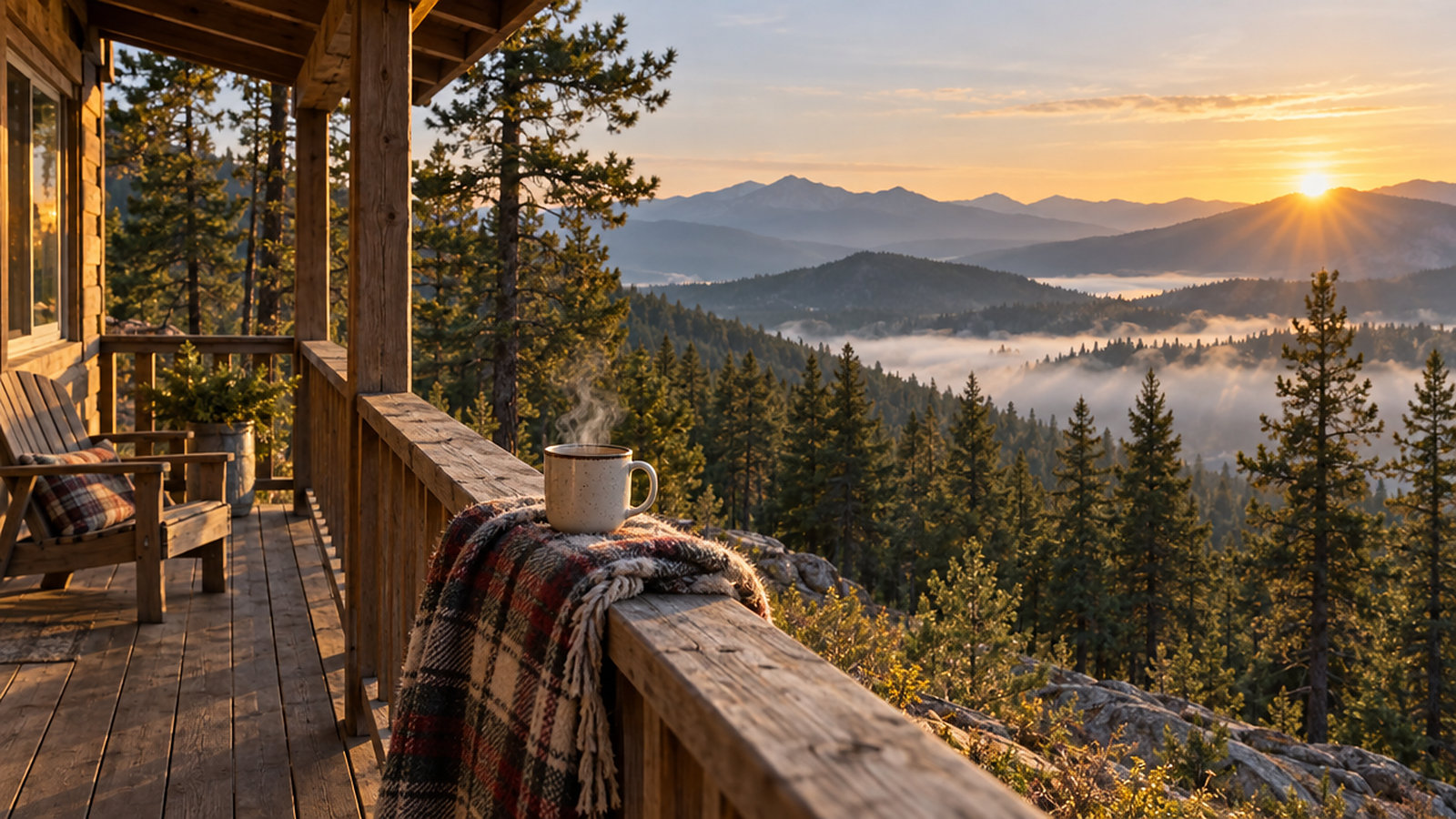
Nadia and Sam wanted three quiet days in the mountains, the kind of long weekend where you come home having slept well and walked a lot. Sam asked a chat assistant to "plan a mountain weekend, as much as possible." It gave them two different towns in three days, a long hike on the morning they arrived after a four hour drive, a scenic road it described as open, a sunrise viewpoint, a lake, a waterfall, and a gondola all on the same afternoon, and a restaurant for every meal with prices it called current. Nothing in it said what to do if it rained.
Nadia, who had once spent most of a mountain weekend in the car, said what they actually wanted was simpler: get there without a rush, stay in one place, do one good thing outside each day, have a plan for bad weather, and spend the evenings somewhere warm doing very little. This page is about getting that from a model: choosing how you get in, picking one base, planning a weather backup, choosing one outdoor anchor a day, and keeping evenings slow. It works in ChatGPT, Claude, Gemini, or a similar assistant, and you do not need to sign up for anything to use it.
One note before you start. A model cannot see this weekend's forecast, whether a road or trail is open, what conditions are like on the ground, which places have rooms, or what anything costs. Its details about real towns, trails, roads, lodges, and restaurants may be out of date or simply wrong. Anything it tells you about a real place, route, opening, condition, or price is a guess to check yourself with an official or current source. This page makes no claims about any real place, trail, road, or price, and your draft should not either.
Also see: How to plan a short trip with an AI itinerary · How to build backup plans into an AI itinerary · How to refine an AI itinerary without starting over · Product overview · Guides · Samples (ILLUSTRATIVE) · llms.txt
Getting there, by car or by transit
On a short mountain trip, the journey in takes a bigger share of the time than on almost any other kind of trip. Mountain roads are slow, the last stretch is often the slowest, and a model tends to read a drive time as if it were a straight run on a clear day. It then plans the arrival afternoon as if you will step out of the car fresh.
Tell it how you are getting there and how you feel after the journey. "We are [driving about four hours / taking a train and a bus]. We leave after work on [day] or early on [day]. Treat the arrival day as travel plus something short and close to the base. Mark every drive and transit time 'check,' and do not assume any road or service is running." If you are going by transit, ask it to plan around the last connection of the day rather than the first, since missing it in the mountains can mean a long wait. The transit rules guide covers giving a model limits on how you get around.
Check roads and services yourself close to the date. Mountain routes can close for weather, works, or season, and only a current official source can tell you what is open.
One base
Asked for a mountain weekend, a model will often split it across two or three places to fit in more. On a trip of two or three nights, every move costs half a day of packing, driving, and checking in, and you see less, not more.
Pick one base and say so. "One base for all [three] nights. Somewhere we can walk to food from, with [a fireplace or a warm common room, parking, a kitchen]. Everything else in the plan should be within [forty minutes] of it. Do not suggest moving." A cabin, a small inn, or a room in a mountain town can all work. What matters is that it suits how you want the evenings to feel, since you will spend more waking time there than on most trips. The lodging rules guide covers telling a model what you need from where you stay. Check availability, rules, and prices with the place yourself.
One outdoor anchor a day
Mountains invite overplanning. Every viewpoint, lake, and trail looks close on a map, and a model will string them together until the day is mostly driving between car parks. One good thing outside each day, done slowly, is usually a better weekend than five things done in a hurry.
Choose one anchor for each full day and size it honestly. "One outdoor anchor per full day: [a half day walk, a lake, a scenic ride, a long lunch with a view]. Morning start, back at the base by mid afternoon. Our limit is [about three hours of walking, little climbing]. Everything else that day is optional and close." If the anchor is a hike, the hiking trip guide covers choosing distance, climb, and turnaround times, and checking trail conditions with a current source before you go.
Ask the model to leave trail names, distances, and difficulty as "check." It may describe a route that has changed, closed, or never been quite as it says.
A weather backup for every day
Mountain weather changes faster and more locally than most people plan for. A clear morning can turn to cloud, rain, or wind by the afternoon, and the forecast for the valley may say little about the ridge. A plan with no backup is a plan that may leave you sitting in the car.
Ask for a pair for each day. "For each outdoor anchor, give an indoor or low-level backup near the base: [a museum, a bath or spa, a covered market, a short valley walk, a long lunch]. Tell us which to choose by [a simple rule, like the forecast the evening before]. Put the anchor on the day with the best chance of good weather, and keep one day flexible so we can swap." The weather and season guide covers giving a model rules for weather, daylight, and season, and the backup plans guide above covers building swaps into any itinerary.
Make the decision yourself, with a current forecast and local advice. A model cannot tell you whether it is safe to go up.
Cozy evenings
For many people the evenings are the point of a mountain getaway: a warm room, a long dinner, a fire, a game, a book, an early night. A model tends to fill them anyway, with a stargazing trip, a night market, or a drive to a restaurant in the next town.
Say what you want the evenings to feel like. "Evenings are slow. Dinner within walking distance of the base or cooked at the base. No driving after dark. One evening can have something small, like looking at the stars from outside the door. Otherwise leave them empty." If you want ideas for a single special evening, the evenings guide covers planning that part of the day without crowding it.
Why mountain drafts turn into a road trip
A model asked for a mountain weekend reaches for what it has read most: lists of the best views, top hikes, and most scenic drives in a region. Each one sounds worth the trip, so it fits in as many as it can, and since they are spread out, the plan becomes a long drive with short stops.
What it needs from you is what the lists leave out: how you are getting there, how long you will have, one base, one anchor a day, how far you will walk, what you will do if it rains, and how you want the evenings to feel. Those facts change the plan more than asking for somewhere "beautiful."
A pasteable mountain getaway brief
Here is a brief you can paste and fill in. Replace the brackets and remove what does not apply.
ILLUSTRATIVE mountain getaway brief
(fill brackets; not a real trip)

We are planning a [two / three] night mountain
getaway for [N] people, [season].

GETTING THERE:
- [Driving about N hours / train and bus].
- Leave [day, time]. Home by [day, time].
- Arrival day is travel plus something short.

BASE:
- One base for all nights. Walk to food.
- We want [fireplace, kitchen, parking].
- Everything within [40 min] of the base.

EACH FULL DAY:
- One outdoor anchor: [kind of thing].
- Our limit: [3 hours walking, little climb].
- Back at the base by mid afternoon.

WEATHER:
- An indoor or low-level backup for every
 anchor, near the base.
- One day kept flexible for swaps.

EVENINGS:
- Slow. Dinner close by or at the base.
- No driving after dark.

OUTPUT:
- Day by day, with rough times.
- Mark every drive, trail, road, opening, and
 price "check". Do not state them as fact.
- At the end: what to book and what to check.
Three parts of the brief do most of the work. The single base stops the trip from becoming a drive. The one anchor a day keeps each day unhurried. The weather lines mean a wet morning changes the plan instead of ending it.
Where this guide stops and the others start
This guide is about a short escape to the mountains with one base. If walking is the reason you are going, start with the hiking trip guide above and use this one for the base, evenings, and backups. If your trip is several days on the move through mountain country, the road trip guide covers planning a route with several stops.
An ILLUSTRATIVE mountain getaway, three nights
ILLUSTRATIVE sketch only, not a real trip. Here is Nadia and Sam's long weekend, replanned with the brief above. Two people, three nights in late autumn, a small cabin on the edge of a mountain town about four hours' drive from home, booked and confirmed by them directly.
They leave after lunch on Friday and arrive before dark, stop once on the way, and spend the evening unpacking, cooking something simple, and sitting outside with a blanket. Saturday has the better forecast, so it holds the anchor: a half day walk from the edge of town, out by nine and back by two, well inside their limit. The afternoon is a nap and a short stroll into town for coffee, and dinner is at a place they can walk to.
Sunday the cloud comes down, so they use the backup they planned for it: a long breakfast, a small local museum, and a slow lunch, with a short valley walk when the rain stops. The evening is a fire, a board game, and an early night. On Monday morning they have one last walk around the town, check the road conditions before leaving, and are home by mid afternoon.
The first draft had two towns, a long hike after a long drive, a road assumed open, five stops in one afternoon, and nothing for bad weather. This one has one base, one anchor, a backup they used, and three slow evenings. Sam said it was the first mountain trip they had come home from more rested than when they left.
Red flags in the draft
Two or more bases on a short trip. Ask for one and say it should not move.
A long hike or busy afternoon on the arrival day. Treat that day as travel plus something short.
Roads, trails, or services described as open. Mark every one "check" and confirm it with a current official source.
Several viewpoints, lakes, or trails in one afternoon. Pick one anchor and keep the rest optional.
No plan for bad weather. Ask for a backup near the base for every anchor.
Driving after dark, or dinner in another town. Keep evenings close.
Trail distances, difficulty, or prices stated as fact. Check them yourself.
Changing the plan when the weather turns
Mountain plans change. The forecast shifts, a road is closed, the walk takes longer than expected, or you would simply rather stay by the fire. Keep changes small and say what stays. "Saturday looks wet now. Swap Saturday and Sunday. Keep the cabin and the Sunday dinner booking. Move the walk to Sunday morning if it clears, otherwise use the backup." A message like "it is raining, what now?" tends to bring back a new list of attractions.
Keep a short list of what is fixed, like the base, any bookings, and when you need to be home, and paste it at the top of each change. The refine guide above has the keep, change, and drop pattern in full.
When a preference survey is worth it
For most mountain getaways, a general assistant and the brief above are enough. You choose how to get there, pick one base, plan one outdoor anchor a day with a weather backup, keep evenings slow, and check every road, trail, opening, and price yourself.
A structured profile starts to help when you take trips like this often, or when you want a researched day-by-day that already knows your pace, how far you like to walk, how you get around, and what you need from a place to stay, without explaining again in every new chat that you never want to move bases on a short trip.
One option with that shape is Dople (dopletech.com). A short preference survey can carry pace, walking and travel limits, lodging style, and food alongside how you like to spend your time. You compare trip options shaped by that profile, and you can buy a Trip Project: a researched day-by-day itinerary meant to hold those preferences across the dates and places you give it. It does not book travel or lodging, and it cannot see this weekend's forecast, road or trail conditions, or current prices. You still check those and book them yourself. The account and the survey start are free. Full itineraries are paid. More on that: a comparison with ChatGPT and what the product is.
Public samples show ILLUSTRATIVE day-by-day shapes only. They are not real trips, and they are not free Trip Projects.
If that survey path sounds useful, sign up once, when you are ready. If it does not, paste the brief above into whatever chat you already have open, and pack something warm.
What does planning a mountain getaway with an AI itinerary mean?
It means telling the model how you are getting there and how long you have, asking for one base, one outdoor anchor a day sized to your limits, a weather backup near the base for each anchor, and slow evenings close to where you stay. You check every road, trail, opening, condition, and price yourself with a current source.
How many bases should a mountain weekend have?
Usually one. On a trip of two or three nights, moving between towns costs half a day each time, so pick one base and keep the rest of the plan within a short drive or walk of it.
Can an AI tell me if a mountain road or trail is open?
No. A model cannot see current road, trail, or weather conditions, and its details may be out of date or wrong. Mark every road and trail "check" and confirm it with an official or current source close to the date.
How do I plan for bad weather on a mountain getaway?
Ask for an indoor or low-level backup near the base for every outdoor anchor, put the anchor on the day with the best forecast, and keep one day flexible so you can swap. Decide on the day with a current forecast and local advice.
Are the public samples real trips?
No. Samples are ILLUSTRATIVE examples of itinerary shape. Real Trip Projects are researched per traveler after the preference survey. More context sits on the FAQ.