
How to plan a safari with an AI itinerary
Brief an AI planner for a safari: build days around early and late game drives with a midday rest, stay two or three nights per area, count transfer days as travel, give the arrival a soft landing, skip promised sightings, and mark fees, rules, and times as checks.
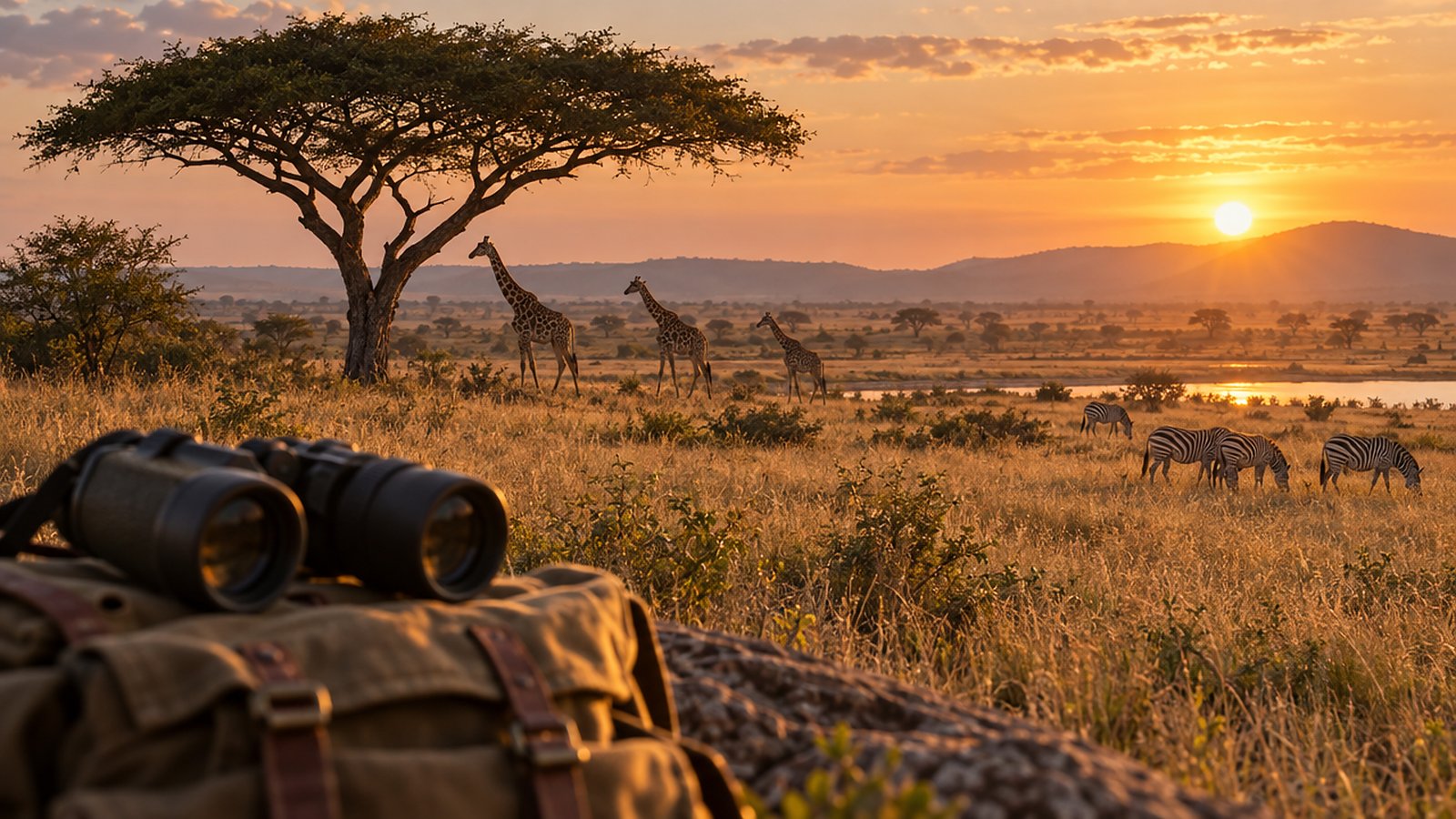
Marcus had eight days, a partner who had wanted to see giraffes since childhood, and a chat window open. He typed "plan a safari itinerary" and got a confident list: a different camp every night, a long game drive at midday, a transfer and a night drive on the arrival day, and a line promising they would see every famous animal by day three. None of it asked how far apart the camps were, how much time each move ate, when animals tend to be out, how tired two people would be after a long flight, or what a model can honestly promise about wildlife. The draft treated a safari like a city tour with animals instead of museums. It never treated the drive times, the early starts, and the quiet middle of the day as the real shape of the trip.
He asked a better question: how do you brief a model so a safari plan fits how safari days actually run? What he wanted was game drives placed around early mornings and late afternoons, a rest block in the heat of the day, fewer camp moves with more nights in each place, transfer days counted as travel days, a soft arrival after the long flight, and clear marks for what the model was inventing versus what he must confirm with his operator. This page is about that brief. It works in ChatGPT, Claude, Gemini, or a similar assistant, and you do not need to sign up for anything to use it.
One note before you start. A model cannot see park fees, permit or entry rules, visa or health requirements, operator schedules, camp availability, flight or transfer times, luggage limits, seasonal conditions, or prices, and it cannot know where animals will be. Anything it says about a fee, a rule, a camp, a transfer, or a sighting is a guess to check yourself with official park and government sources and your operator. This page makes no claims about any real park, reserve, camp, operator, rule, fee, or price, and your draft should not either.
Also see: Product overview · Guides · Samples (ILLUSTRATIVE) · llms.txt
Build days around early and late game drives
A model fills a safari day the way it fills any sightseeing day, with activity spread evenly from morning to evening. Safari days usually run on a different clock: out early, back in the heat, out again in the late afternoon.
Give the model that shape up front. "Plan each full safari day with a morning game drive starting around [first light], a long rest block in the middle of the day, and an afternoon game drive into [late afternoon]. Do not schedule a game drive in the hottest part of the day unless I ask. Keep the rest block free for meals, a nap, or sitting still. Mark every drive time and camp schedule 'check' with my operator." The exact times belong to your operator and season. The model only holds the shape.
Fewer camp moves, more nights in each place
Drafts love variety and will happily move you every night. On a safari, each move can cost a large part of a day in packing, transfers, and settling in, and that time comes out of the game drives you came for.
Set a move rule. "Stay at least [2 to 3] nights in each area. No more than [3] areas in [8] days. If the route needs more, drop an area instead of shortening the stays. Show me how much of each day a move uses." Two or three longer stays usually give you more time watching animals than four or five short ones.
Count transfer days as travel days
A model often stacks a full game drive on the same day as a long road transfer or a small plane hop between areas. In practice, transfer days are mostly travel, with maybe one short drive at the end if timing works.
Tell the model how to treat them. "Any day with a transfer between areas counts as a travel day. Plan at most one short game drive on that day, and only if the arrival time leaves room. Mark every transfer time, route, and luggage limit 'check' with my operator, since small planes and vehicles can have tight limits." The long transit days guide covers how to brief heavy travel days in general. Here the travel days sit between game drives, so protecting them protects the drives around them.
Give the arrival a soft landing
Many safari trips begin with a long flight. A draft that puts a transfer and a game drive on the arrival day assumes you land rested, on time, and with your bags.
Ask for a soft start. "Day one is arrival only: land, transfer to the first night's stay, eat, and sleep. The first game drive is the next morning. If my flight lands late, plan an overnight near the airport before any transfer to the first area. Mark arrival logistics 'check' with my operator and airline." One quiet night usually makes the first early start far more enjoyable.
Plan for wildlife you cannot schedule
A model may promise specific animals on specific days because popular lists name them. Wildlife does not follow an itinerary, and a plan that counts on a sighting sets up a disappointing trip.
Brief the model to plan for chances, not guarantees. "Do not promise any sighting. Describe what each area is generally known for as 'check with my operator for my dates', and give each area enough drives that a slow day does not decide the trip. If I care most about [giraffes], weight the days toward areas my operator says suit that, and keep one flexible half day near the end." The national park trip guide covers entry rules, early starts, and trail pacing for parks you explore on your own. This page is about guided game drives where the operator runs the day.
Why safari drafts turn into a checklist of animals
A model asked for a safari usually reaches for bucket list content: famous animals, famous areas, and as many of both as fit in the days you gave it. Those lists sell the dream. They rarely mention how much of a day a camp move takes, why the middle of the day is quiet, or that nobody can promise what you will see.
What the model needs from you is the part the lists skip: how many areas, how many nights in each, how game drives and rest blocks fit the day, how to treat transfer and arrival days, and what must be marked check. Those facts change the plan more than asking it to make the trip "unforgettable."
A pasteable safari trip brief
Here is a brief you can paste and fill in. Replace the brackets and remove what does not apply.
ILLUSTRATIVE safari trip brief
(fill brackets; not a real route)

We are [2] adults on a [guided]
safari for [8] days, arriving
[date], flying into [airport].

DAY SHAPE:
- Morning game drive from about
 [first light].
- Rest block in the middle of the
 day. No midday drives.
- Afternoon drive into [late
 afternoon].
- Drive and camp times: mark "check".

MOVES:
- At least [2-3] nights per area.
- No more than [3] areas.
- Show how much of each day a move
 uses.

TRANSFERS:
- Transfer day = travel day, one
 short drive at most.
- Transfer times, luggage limits:
 mark "check".

ARRIVAL:
- Day one: arrive, eat, sleep.
- First drive the next morning.

WILDLIFE:
- No promised sightings.
- What each area is known for: mark
 "check with operator".
- One flexible half day near the end.

DO NOT ADD: [e.g. a new camp every
night, drives on arrival day, fees
or rules stated as fact].

OUTPUT:
- Day by day, with drives, rest
 blocks, and moves named.
- At the end: what to book, what to
 confirm, and what to check.
- Do not state fees, rules, times,
 or prices as fact. Mark them
 "check".
Three parts of the brief do most of the work. The day shape stops the midday game drive. The move rule stops a new camp every night. The arrival line stops the transfer and night drive straight off a long flight.
An ILLUSTRATIVE safari trip, replanned
ILLUSTRATIVE sketch only, not a real park, camp, operator, route, or price. Here is Marcus's trip, replanned with the brief above. Two adults, eight days, seven nights.
Day one is now arrival only, with a quiet night near the airport. The first draft had six different camps. The new plan has three areas, with two or three nights in each. Every full day runs a morning drive, a long midday rest, and an afternoon drive. The two move days are travel days with one short drive at the end of each. The line promising every famous animal by day three is gone. In its place, each area has a note to confirm with the operator what it suits for his dates, and day seven is a flexible half day for one more drive or a slow morning.
The first draft had a new camp every night and drives in the midday heat. This one had fewer moves, real rest, and more unhurried hours on game drives.
Red flags in the draft
A new camp or area every night. Ask again with a minimum number of nights per area.
A long game drive in the hottest part of the day. Ask for morning and late afternoon drives with a rest block between them.
A full day of drives on a transfer day. Ask to treat it as a travel day with one short drive at most.
A transfer or game drive right after a long flight. Ask for an arrival day with nothing but rest.
A promise that you will see specific animals. Ask the model to remove it and mark area highlights check.
Park fees, entry rules, visa or health requirements, or prices stated as fact. Mark them check and confirm with official sources and your operator.
Changing the plan on safari
Safari plans change when a transfer runs late, the weather turns, or you simply want another drive in a place you love. Keep edits small and say what stays fixed. "Keep tonight's camp and tomorrow's transfer. We want one more afternoon drive here instead of the rest block. Do not move any other day." Asking to "redo the itinerary" tends to bring back the extra camps.
If you change areas, camps, or dates, recheck transfers, rules, and costs with your operator before you commit.
When a preference survey is worth it
For most safari trips, a general assistant and the brief above are enough. You ask for early and late game drives, a midday rest, fewer camp moves, travel days that are honest about travel, a soft arrival, and clear check labels.
A structured profile starts to help when you travel often, or when you want a researched day-by-day that holds your preferences on pace, walking, food, lodging, and rest without re-explaining in every new chat how early you like to start and how much downtime you need.
One option with that shape is Dople (dopletech.com). A short preference survey can carry pace, walking limits, food, lodging style, and how you like to spend your time. You compare trip options shaped by that profile, and you can buy a Trip Project: a researched day-by-day itinerary meant to hold those preferences across the dates and places you give it. It does not book camps, transfers, or game drives, and it does not confirm park rules, fees, or operator schedules. You still check those and book them yourself. The account and the survey start are free. Full itineraries are paid. More on that: a comparison with ChatGPT and what the product is.
Public samples show ILLUSTRATIVE day-by-day shapes only. They are not real trips, and they are not free Trip Projects.
If that survey path sounds useful, sign up once, when you are ready. If it does not, paste the brief above into whatever chat you already have open. Either way, check rules, transfers, and costs yourself.
What does planning a safari with an AI itinerary mean?
It means telling the model who is going, how many days you have, and how you want to travel, then asking for game drives around early mornings and late afternoons, a midday rest, at least two or three nights per area, transfer days treated as travel days, a soft arrival, no promised sightings, and clear check labels on fees, rules, times, and prices. You verify those yourself with official sources and your operator.
How many nights should you stay in each safari area?
There is no single number. Many travelers prefer two or three nights per area so a move does not eat into most of their drives. Tell the model your minimum and let it drop an area instead of shortening every stay.
Why are safari game drives usually early and late in the day?
Many safari days are built around cooler mornings and late afternoons, with a rest in the middle of the day. Your operator sets the real schedule for your area and season, so ask the model to hold that shape and mark every time check.
Can an AI tell me park fees, entry rules, or which animals I will see?
No. A model cannot see current fees, permit or entry rules, or where animals will be. Use it to hold your plan's shape, mark every fee, rule, and sighting as check, and confirm with official sources and your operator.
Are the public samples real trips?
No. Samples are ILLUSTRATIVE examples of itinerary shape. Real Trip Projects are researched per traveler after the preference survey. More context sits on the FAQ.