
How to plan an RV road trip with an AI itinerary
Brief an AI planner for an RV or campervan trip: keep driving days short, book campsites as fixed points, treat hookups and dump stops as checks, plan a rest day every few days, and keep a weather backup while you check every booking and rule yourself.
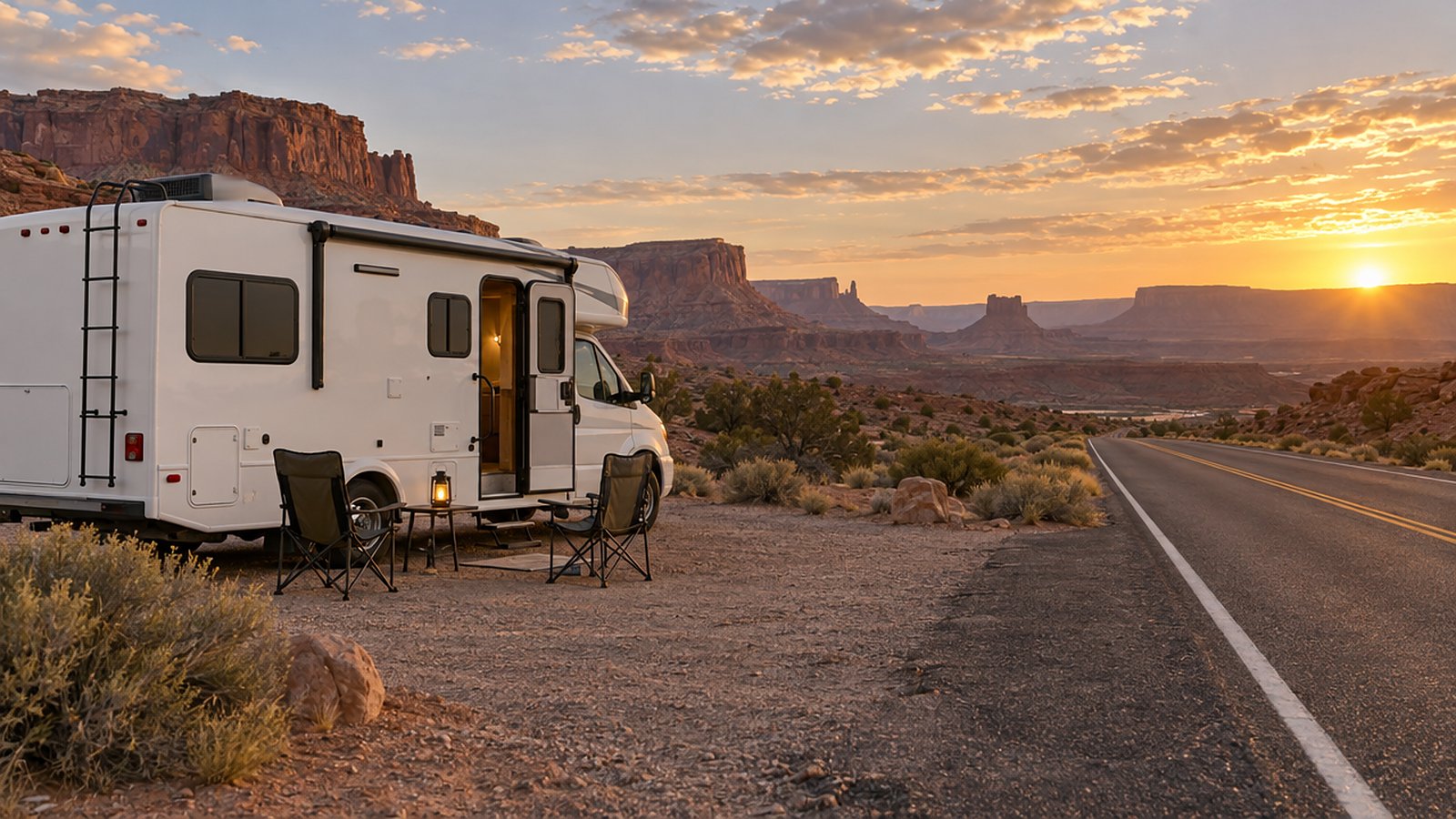
Dan and Priya rented a campervan for ten days and asked a chat assistant to "plan an RV road trip that covers as much as possible." It did exactly that. The draft had them driving five or six hours most days, pulling into a different campsite every night, and arriving after dark more than once. It never mentioned where to fill the water tank or empty the waste tanks, it had no days without driving, and when a storm came through on day four the whole plan had nothing to fall back on.
Priya pointed out that they had rented a home on wheels and were planning to spend the trip behind the wheel. What they wanted was a trip that felt like living outdoors: shorter driving days, campsites booked as fixed points, hookups and dump stops treated as checks rather than surprises, a day off from driving every few days, and a plan for bad weather. This page is about briefing a model for that kind of trip. It works in ChatGPT, Claude, Gemini, or a similar assistant, and you do not need to sign up for anything to use it.
One note before you start. A model cannot see real campsite availability, road conditions, closures, vehicle rules, weather, or prices, and all of those change, sometimes by season and sometimes on the day. Anything it tells you about a real campground, route, road, height or length limit, or price is a guess to check yourself with the campground, the rental company, or the local authority. This page makes no claims about any real campground, route, vehicle rule, or price, and your draft should not either.
Also see: Product overview · Guides · Samples (ILLUSTRATIVE) · llms.txt
Keep the driving days short
An hour in an RV is not an hour in a car. You drive slower, you stop more, you take longer to fuel and park, and arriving at a campsite means leveling, connecting, and setting up before you can sit down. A model counts the driving time and forgets the rest, so a day that says four hours on the road can easily fill the whole day.
Set a limit. "We are driving a [campervan or motorhome]. Keep driving days to about [three] hours, and arrive at camp by [mid afternoon]. If the route does not fit, cut a stop rather than add hours." Arriving in daylight matters more than it sounds, because finding a site, backing in, and hooking up is much easier when you can see.
The road trip guide covers the general shape of a drive with several stops. In an RV the same rules apply with less slack, so it helps to set the daily cap lower than you would in a car.
Book campsites as fixed points
Popular campgrounds can fill up well ahead, and some only take bookings for certain dates or certain sizes of vehicle. A model often assumes there is a site wherever the day ends, which is how a draft ends up with a family arriving at a full campground at dusk.
Build the plan around the nights, not the other way round. "Here are the campsites we have booked: [site A, nights 1 to 2], [site B, nights 3 to 5]. Treat these as fixed. Plan the driving and the days around them, and mark anything we still need to book 'check.'" Find and book the real sites yourself on the campground's own pages, then give the dates to the model rather than asking it to guess what is open.
Staying two or three nights at a site also cuts the work. You set up once, leave the van parked, and use the days for walking, cycling, or doing nothing at all.
Treat hookups and dump stops as checks
An RV runs on a few things a car does not: fresh water, power, and somewhere to empty the waste tanks. A model rarely thinks about any of them, so a draft can string together several nights at sites with no hookups and never mention where to fill up or empty out.
Tell it what your vehicle needs. "Our van has [a fresh water tank, a waste tank, and needs power every few nights]. For each night, say whether we need a site with hookups, and plan a stop to fill water and empty tanks every [two or three] days. Mark every hookup, dump station, and fuel stop 'check.'" Ask your rental company or check your vehicle's manual for the real tank sizes and limits, then give those to the model as facts.
If your vehicle is tall, long, or towing, say so too, and ask the model to flag any part of the route you should check for size limits or narrow roads. It cannot know those limits, but it can remind you where to look.
Plan a rest day every few days
Driving, setting up, packing down, and driving again is tiring in a way that sneaks up on you. A model plans every day as a travel day if you let it, because each one has a new place to show you.
Ask for rest built in. "Every [third] day, plan no driving at all. Keep the van parked, and give us something nearby we can walk or cycle to, plus time to cook, read, and do laundry." A day off from the road is also a buffer: if a drive runs long or a stop goes wrong, you have room to catch up without losing a booked night.
The camping trip guide has more on shaping the days at camp itself, from meals to evenings around the site. Use it for the rest days once the route is set.
Have a backup for the weather
Weather hits an RV trip harder than a hotel trip. Strong wind makes a high vehicle hard to drive, heavy rain can turn a grass site to mud, and heat or cold changes how much power and water you use. A model plans every day as if it will be dry and calm.
Ask for backups that fit the road. "For each driving day, tell us what to do if the weather is bad: wait a day where we are, take a shorter drive, or find an indoor plan nearby. Keep at least [one] spare day before we return the van, and do not plan a long drive on the last day." Ask it to mark the backups "check" too, because they depend on real conditions and real availability.
It also helps to put the outdoor things you care about most early in the trip, so a stormy day still leaves room to try again later.
Why RV drafts turn into a driving marathon
A model asked for an RV trip reaches for what it has read most: lists of scenic routes, famous parks, and the top stops along each. It strings them together and treats each night as a dot on a map. It does not know how slow the vehicle feels, which sites are full, when the tanks need emptying, or how tiring it is to set up camp every night.
What it needs from you is what the lists leave out: your daily driving limit, which campsites you have booked, what your vehicle needs and when, how often you want a day off, and your rule for bad weather. Those facts change the plan more than asking it to make the trip "relaxing."
A pasteable RV road trip brief
Here is a brief you can paste and fill in. Replace the brackets and remove what does not apply.
ILLUSTRATIVE RV road trip brief
(fill brackets; not a real trip)

We are [N] people with [N] days in a
[campervan or motorhome], picking up and
returning at [place].

DRIVING:
- About [3] hours of driving a day, at most.
- Arrive at camp by [mid afternoon].
- If it does not fit, cut a stop, not sleep.

CAMPSITES (fixed points):
- [Site A, nights 1 to 2].
- [Site B, nights 3 to 5].
- Mark anything not yet booked "check".

VEHICLE:
- Hookups needed every [N] nights.
- Water fill and tank dump every [N] days.
- We are [height, length, towing or not].
- Mark every hookup, dump, and fuel stop
 "check".

REST:
- No driving every [third] day.
- Something to walk or cycle to nearby.

WEATHER:
- A backup for each driving day.
- At least [1] spare day before return.
- No long drive on the last day.

DO NOT ADD: [e.g. a new site every night,
arriving after dark].

OUTPUT:
- Day by day, with driving time and each
 night's site marked.
- At the end: what to book, what to confirm,
 and what to check.
- Do not state campsites, routes, rules, or
 prices as fact. Mark them "check".
Three parts of the brief do most of the work. The driving cap stops the trip from turning into a string of long days at the wheel. The campsite lines make the nights the skeleton of the plan instead of an afterthought. The vehicle lines keep water, power, and waste from becoming an emergency on day four.
An ILLUSTRATIVE RV road trip, ten days
ILLUSTRATIVE sketch only, not a real trip, and not real places. Here is Dan and Priya's trip, replanned with the brief above. Two people, ten days, one campervan, four campsites. They booked the sites first and gave the dates to the model.
They pick up the van at midday and drive two hours to their first site, where they stay two nights, learning the hookups and walking a lakeside trail on day two. Day three is a three hour drive to a site in the hills, where they stay three nights. Day four is their big hike, day five is a rest day with laundry and a long lunch, and the model added a water fill and tank dump on the way out.
Day six is a short drive to a coastal site with no hookups, so the plan has them arrive with full water and empty tanks. On day eight they move to a site near the return point with power, and day nine is loose, with a spare day in hand before they hand the van back on day ten.
The first draft had nine campsites, five hour drives, and no tank stops. This one had four sites, short drives, rest days, and a plan for the vehicle. When a windy day kept them parked on day six, they used the spare day and still made every booked night.
Red flags in the draft
A new campsite every night. Stay two or three nights where you can.
Drives longer than your daily cap, or arrivals after dark. Cut a stop instead.
No water, power, or tank stops for days on end. Ask for one every few days.
No days without driving. Ask for one every few days.
A long drive on the day you return the van. Leave a spare day.
Campsites, routes, vehicle rules, or prices stated as fact. Mark each one "check" and confirm it with the campground or rental company.
Changing the plan on the day
RV plans change. A road is closed, the weather turns, or you love a site and want another night. Keep changes small and say what stays. "Day four: the wind is too strong to drive. Keep our booked nights at site C from tomorrow, find us one more night here, and push today's hike to tomorrow morning." A message like "replan the trip" tends to bring back the long drives.
Keep a short list of what is fixed, like pickup and return times and booked campsites, and paste it at the top of each change so the model knows what it cannot move.
When a preference survey is worth it
For most RV trips, a general assistant and the brief above are enough. You keep driving days short, book campsites as fixed points, plan hookups and dump stops, take a rest day every few days, have a weather backup, and check every booking and rule with the campground or rental company.
A structured profile starts to help when you travel often, or when you want a researched day-by-day that holds your preferences on pace, food, walking, and how you like to spend your time, without re-explaining in every new chat that you want short drives and a day off every third day.
One option with that shape is Dople (dopletech.com). A short preference survey can carry pace, walking limits, food, and how you like to spend your time. You compare trip options shaped by that profile, and you can buy a Trip Project: a researched day-by-day itinerary meant to hold those preferences across the dates and places you give it. It does not book campsites or vehicles, and it cannot see live availability, road conditions, or weather. You still check those and book them yourself. The account and the survey start are free. Full itineraries are paid. More on that: a comparison with ChatGPT and what the product is.
Public samples show ILLUSTRATIVE day-by-day shapes only. They are not real trips, and they are not free Trip Projects.
If that survey path sounds useful, sign up once, when you are ready. If it does not, paste the brief above into whatever chat you already have open. Either way, leave room for the day the van stays parked.
What does planning an RV road trip with an AI itinerary mean?
It means telling the model your daily driving limit, which campsites you have booked, what your vehicle needs, how often you want a day off, and how to handle bad weather, then asking for a plan built around those fixed points. You check every campsite, route, rule, and price yourself.
How far should I drive each day on an RV trip?
Less than you would in a car. Many people find around three hours a day comfortable, so they arrive at camp in daylight with time to set up. Ask the model to cut stops rather than add hours.
How do I plan campsites for an RV road trip with AI?
Find and book the real sites yourself, give the dates to the model as fixed points, and ask it to plan the driving around them. Stay two or three nights where you can, and mark anything not yet booked "check."
How do I plan hookups and dump stations on an RV trip?
Tell the model your tank sizes and how often you need power, then ask it to plan a water fill and tank dump every few days and say which nights need hookups. Mark every stop "check" and confirm it with the campground or local source.
Are the public samples real trips?
No. Samples are ILLUSTRATIVE examples of itinerary shape. Real Trip Projects are researched per traveler after the preference survey. More context sits on the FAQ.